
Cats are experts at hiding how they feel. One minute, your cat is curled up on the sofa, purring away, and the next, they’re staring at you like you’ve personally offended them. That’s just part of being a cat.
But as a pet parent, how can you tell when your cat is actually healthy, comfortable, and feeling good?
You don’t need to be a veterinarian to notice the everyday signs of a healthy cat. Your cat’s appetite, energy level, coat, eyes, litter box habits, and even the way they interact with you can tell you quite a lot.
Of course, every cat is different. Some are playful and noisy, while others would happily spend most of the day sleeping in a sunny corner. What matters most is knowing what is normal for your cat, and noticing when something suddenly changes.
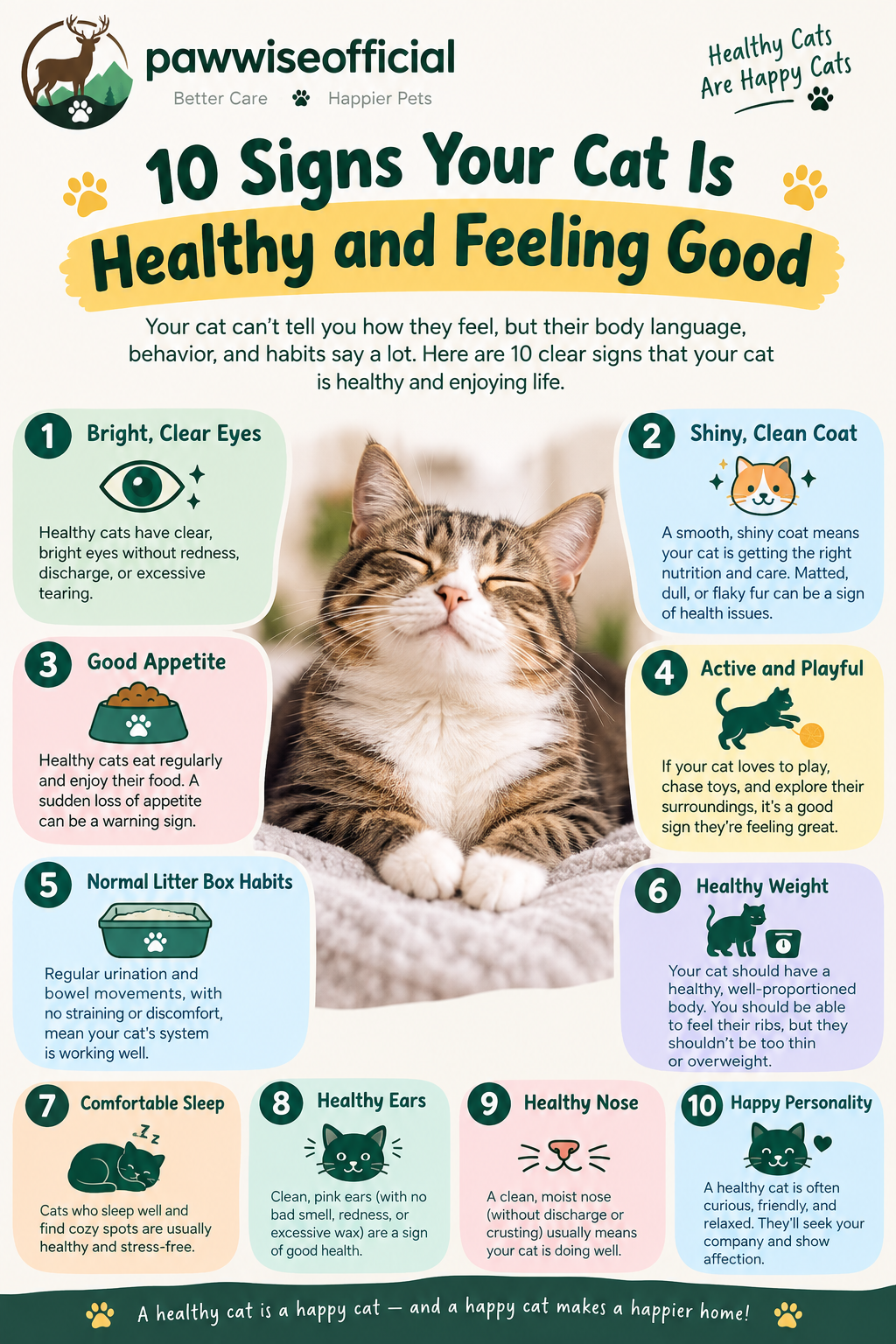
Here are 10 common signs that your cat is healthy and feeling good.
1. Your Cat Has a Healthy Appetite
One of the easiest ways to keep an eye on your cat’s health is to pay attention to their eating habits.
A healthy cat usually has a fairly consistent appetite. They may get excited when you open the food bag, come running when they hear their bowl being filled, or simply eat their meals without much fuss.
Some cats are enthusiastic eaters, while others prefer to nibble throughout the day. Both can be normal.
What matters is a noticeable change.
If your cat suddenly refuses food, eats much less than usual, or seems unusually hungry all the time, it’s worth paying attention. Changes in appetite can sometimes be linked to stress, dental problems, digestive issues, or other health concerns.
So, is your cat suddenly turning their nose up at a food they normally love?
Don’t ignore the change, especially if it continues.
A healthy diet also matters. Your cat should receive a complete and balanced cat food appropriate for their age, lifestyle, and nutritional needs.
2. Their Weight Stays Fairly Stable
A healthy cat should maintain a relatively stable body weight as they grow into adulthood.
That doesn’t mean your cat needs to look exactly like the cats you see online. Cats come in different shapes and sizes, and their ideal weight can vary depending on their breed, age, body structure, and activity level.
Still, sudden weight loss or unexplained weight gain deserves attention.
You should be able to gently feel your cat’s ribs without them being covered by a thick layer of fat, but the ribs shouldn’t be extremely prominent either. Your cat should also have a natural waist when viewed from above.
If you’re unsure whether your cat is at a healthy weight, ask your veterinarian during a routine checkup.
Keeping your cat at a healthy weight is important because obesity can increase the risk of several health problems.
And yes, those extra treats can add up quickly, even when your cat gives you those heartbreaking eyes!
3. Your Cat Has Bright, Clear Eyes
Take a close look at your cat’s eyes.
Healthy cat eyes are generally clear and bright, although the exact color can vary from cat to cat. You shouldn’t normally see excessive discharge, thick mucus, or significant redness.
Your cat should also be able to open both eyes comfortably.
A little crust around the eyes after sleeping may happen occasionally, but persistent discharge is different.
Watch for signs such as:
- Red or swollen eyes
- Excessive tearing
- Thick discharge
- Squinting
- Cloudiness
- Keeping one eye closed
- Frequently rubbing the face
If you notice these symptoms, especially if they appear suddenly, contact your veterinarian.
Your cat’s eyes can sometimes give you an early clue that something isn’t quite right.
4. Their Coat Looks Clean and Well-Maintained
A healthy cat usually takes grooming seriously.
In fact, cats can spend a surprising amount of time cleaning themselves. That grooming helps keep their coat smooth, clean, and comfortable.
Depending on your cat’s breed and coat type, a healthy coat may feel soft and look shiny, fluffy, or sleek.
Regular grooming is also useful because it gives you an opportunity to notice changes.
Run your hands gently through your cat’s fur and look for things such as:
- Bald patches
- Excessive dandruff
- Red or irritated skin
- Scabs
- Fleas or flea dirt
- Unusual lumps
- Excessive shedding
Some shedding is completely normal, especially during seasonal changes. But if your cat suddenly starts losing large amounts of fur, scratching constantly, or developing bald spots, something may be bothering them.
Regular brushing can help reduce loose fur, prevent mats, and keep your cat’s coat looking its best.
5. Your Cat Uses the Litter Box Normally
Okay, this might not be the most glamorous part of cat ownership, but your cat’s litter box habits can tell you a lot about their health.
A healthy cat generally has a consistent bathroom routine. You should become familiar with what is normal for your individual cat, including how often they urinate and what their stools usually look like.
Changes can sometimes be an early warning sign.
For example, pay attention if your cat:
- Suddenly urinates much more or less often
- Strains in the litter box
- Has diarrhea repeatedly
- Becomes constipated
- Has blood in their urine or stool
- Starts urinating outside the litter box
- Cries or seems uncomfortable while using the litter box
Urinary problems can become serious quickly, particularly in male cats. If your cat is repeatedly trying to urinate but little or no urine is coming out, that can be an emergency and requires immediate veterinary attention.
Keeping the litter box clean also matters. Cats are naturally clean animals, and many dislike using a dirty box.
A clean litter box isn’t just better for your home, it also makes it much easier for you to notice changes in your cat’s bathroom habits.
6. They Have Normal Energy for Their Personality
Does your cat still get the occasional burst of energy?
Maybe they race through the hallway at midnight, chase a toy across the living room, or suddenly decide that your feet are the most exciting thing in the house.
Those little moments are usually good signs.
Healthy cats generally have an energy level that is appropriate for their age and personality. A young kitten may be extremely active, while an older cat may prefer short play sessions followed by a long nap.
And that brings us to an important point, cats sleep a lot.
So don’t panic just because your cat spends a large part of the day sleeping.
Instead, look for changes from their normal routine.
If a normally playful cat suddenly becomes extremely tired, stops interacting with the family, or seems weak and withdrawn, pay attention.
Sometimes the most important health clue isn’t what your cat is doing, but what they have stopped doing.
7. Your Cat Is Interested in Their Surroundings
A healthy, comfortable cat is usually curious about what is happening around them.
They might watch birds through the window, investigate a strange noise, sniff a new box, or follow you from room to room.
Some cats are naturally more curious than others, of course.
Your cat doesn’t need to act like an explorer every minute of the day. But they should generally show some interest in their environment.
Environmental enrichment can help support this natural curiosity. Scratching posts, climbing areas, puzzle feeders, interactive toys, and safe places to hide can make an indoor cat’s life much more interesting.
Even something as simple as putting a comfortable bed near a window can give your cat something entertaining to watch.
Sometimes, the best cat toy is still… a cardboard box.
8. Their Breathing Looks Comfortable
When your cat is resting peacefully, their breathing should generally look calm and comfortable.
You shouldn’t normally see your cat struggling to breathe, breathing with their mouth open, or making unusual noises with every breath.
Watch your cat when they are relaxed rather than immediately after intense play.
Signs that breathing may not be normal include:
- Rapid or difficult breathing
- Open-mouth breathing
- Excessive effort when breathing
- Persistent coughing
- Wheezing
- Blue or gray-looking gums or tongue
Breathing difficulties should not be brushed off as simply being tired.
If your cat appears to be struggling to breathe, seek veterinary help promptly.
9. They Show Normal Social Behavior
Not every cat is going to greet you at the door like an excited dog.
Some cats love cuddles. Others prefer sitting beside you without actually touching you. Some will follow you everywhere, while others seem to consider personal space a basic human right.
All of these personalities can be perfectly normal.
One of the strongest signs that your cat is feeling good is that they continue behaving like themselves.
A social cat may continue rubbing against your legs, purring, sitting beside you, or asking for attention.
A more independent cat may simply stay nearby, watch what you’re doing, or occasionally come over for a quick head scratch.
The key is consistency.
If your normally affectionate cat suddenly hides all day, avoids being touched, or becomes unusually aggressive, something may be wrong.
Behavioral changes deserve attention, particularly when they happen without an obvious reason.
10. Your Cat Seems Comfortable and Content
Perhaps the biggest sign of a healthy and happy cat is simple, everyday comfort.
You might find your cat sleeping peacefully with their paws tucked underneath them. Maybe they stretch out in a warm patch of sunlight, groom themselves, play with a favorite toy, or settle beside you while you work.
A relaxed cat often has a comfortable posture and can settle into normal sleep without constantly appearing restless or distressed.
You may also notice behaviors such as:
- Gentle purring
- Slow blinking
- Stretching
- Normal grooming
- Playing
- Relaxed body language
- Choosing comfortable sleeping spots
- Seeking affection when they want it
Remember, though, purring doesn’t always mean a cat is happy. Cats can also purr when they are stressed, frightened, or uncomfortable.
That’s why it’s better to look at the whole picture rather than relying on one behavior.
How Can You Tell if Your Cat Is Really Healthy?
The best way to understand your cat’s health is to know their normal routine.
How much do they usually eat?
How often do they use the litter box?
How active are they?
Do they enjoy being brushed?
Where do they usually sleep?
How do they normally behave around you?
These everyday details create a baseline. Once you know what is normal for your cat, unusual changes become much easier to spot.
Regular veterinary checkups are also an important part of responsible cat care. Even when your cat appears perfectly healthy, routine examinations can help identify potential problems before they become more serious.
When Should You Call the Vet?
Not every unusual behavior means your cat is sick. Cats can have an off day, become stressed after a change at home, or simply decide that today is a good day to ignore everyone.
Still, some changes shouldn’t be ignored.
Contact your veterinarian if you notice persistent or sudden changes such as:
- Loss of appetite
- Significant weight loss or gain
- Repeated vomiting or diarrhea
- Difficulty urinating
- Blood in urine or stool
- Severe lethargy
- Breathing difficulties
- Sudden behavioral changes
- Persistent scratching or hair loss
- Problems walking or jumping
- Signs of pain
If your cat seems seriously unwell or is having trouble breathing, don’t wait to see if the problem disappears.
Frequently Asked Questions
How do I know if my cat is healthy?
A healthy cat typically has a consistent appetite, stable weight, clear eyes, a well-maintained coat, normal litter box habits, and an energy level that is normal for their age and personality.
How can I tell if my cat is happy?
Relaxed body language, normal grooming, playfulness, curiosity, comfortable sleeping, and normal social behavior can all be positive signs. However, every cat has a different personality.
How often should a healthy cat visit the vet?
Routine veterinary visits are important even when your cat appears healthy. Your veterinarian can recommend an appropriate schedule based on your cat’s age, lifestyle, and individual needs.
Is it normal for cats to sleep all day?
Cats naturally sleep for many hours each day. The important thing is to notice whether your cat’s sleeping habits have changed significantly from their usual routine.
What is the biggest sign that something is wrong with my cat?
A sudden change from your cat’s normal behavior is one of the most useful things to watch for. Changes in eating, drinking, litter box use, grooming, energy, or social behavior can all deserve attention.