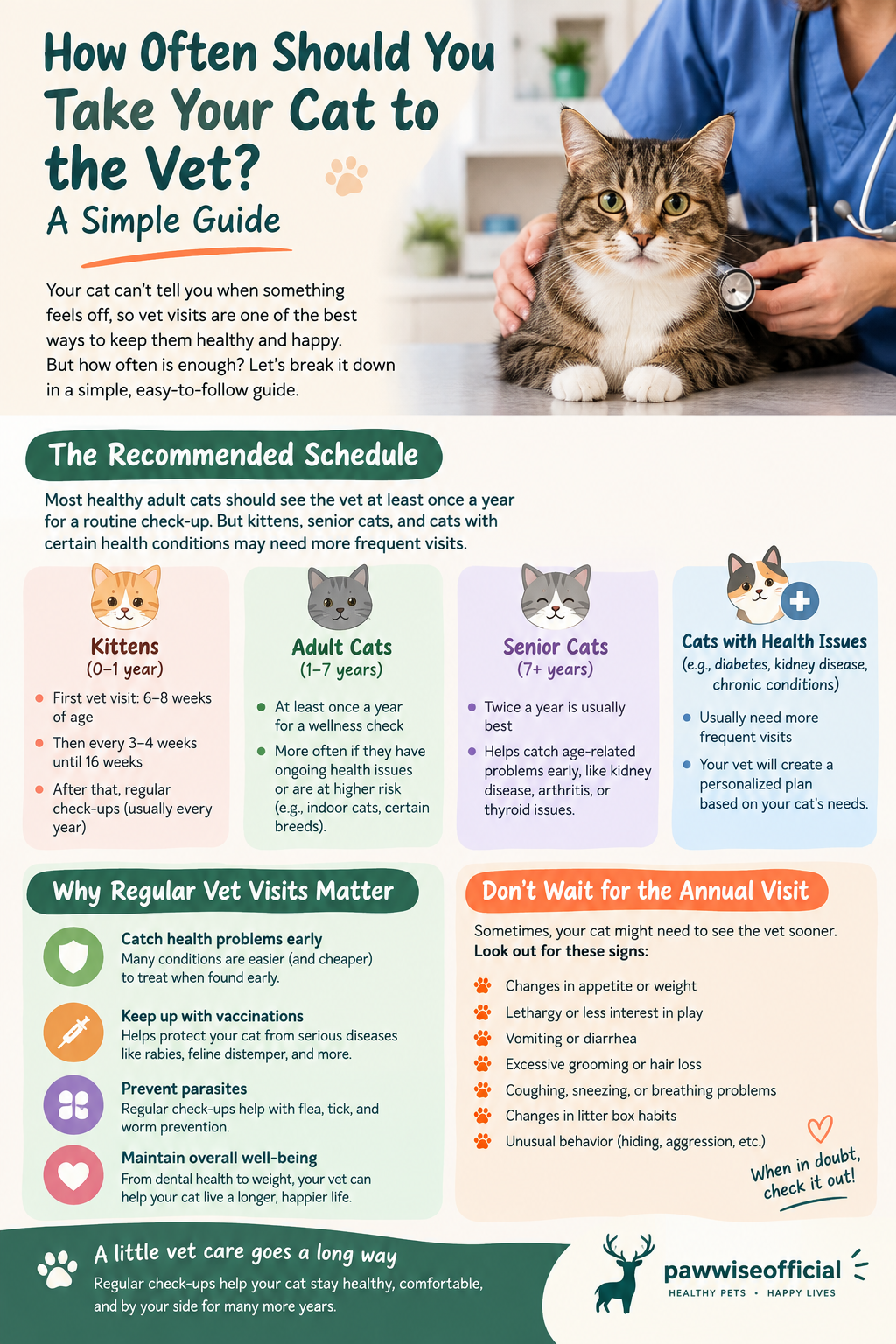
If your cat looks perfectly healthy, eats normally, plays when they feel like it, and spends most of the day sleeping in their favorite spot, you might wonder, “Does my cat really need to go to the vet that often?”
It’s a fair question.
Cats are incredibly good at hiding discomfort, and that’s one of the reasons regular veterinary checkups are so important. Your cat may look completely fine on the outside while a small health problem is quietly developing.
So, how often should you take your cat to the vet?
For most healthy adult cats, a veterinary checkup at least once a year is a reasonable general guideline. However, kittens, senior cats, and cats with ongoing health problems may need to visit the veterinarian more often.
The right schedule depends on your cat’s age, lifestyle, medical history, and individual needs.
Let’s break it down, so you know what to expect, and when that next vet visit should be on your calendar.
How Often Should a Healthy Cat Go to the Vet?
For a healthy adult cat, an annual veterinary exam is commonly recommended.
Think of it as your cat’s yearly health checkup.
Even if your cat seems perfectly healthy, the veterinarian can look for problems you might not notice at home. A routine examination may include checking your cat’s:
- Weight and body condition
- Eyes and ears
- Teeth and gums
- Skin and coat
- Heart and lungs
- Abdomen
- Joints and movement
- Overall behavior and physical condition
Your veterinarian can also discuss vaccinations, parasite prevention, nutrition, dental care, and other aspects of preventive cat care.
And no, your cat probably won’t appreciate the trip.
They may complain loudly in the carrier, give you the silent treatment afterward, and act as though you’ve betrayed the entire family.
But regular vet visits are one of the best things you can do for your cat’s long-term health.
How Often Should Kittens Go to the Vet?
Kittens usually need more frequent veterinary visits than adult cats.
Why?
Because the first year of a kitten’s life is full of important changes.
During kitten vet visits, your veterinarian can monitor growth, discuss nutrition, check for parasites, recommend vaccinations, and help you establish a healthy care routine.
Vaccinations are particularly important during kittenhood, as young cats need protection against several infectious diseases.
Your veterinarian will create a vaccination schedule based on your kitten’s age, health, lifestyle, and local recommendations.
Kitten visits are also a great time to ask questions.
Not sure how much your kitten should eat?
Wondering when to start brushing their teeth?
Confused about litter box behavior?
Ask.
There really is no such thing as a silly question when you’re trying to take good care of a new kitten.
What About Adult Cats?
Once your cat reaches adulthood, their veterinary schedule may become less frequent than during kittenhood.
For many healthy adult cats, yearly checkups are a useful routine.
During these visits, your veterinarian can monitor changes over time.
And that’s something people sometimes overlook.
A single checkup gives your vet a snapshot of your cat’s health. Regular visits create a history.
If your cat weighed 4.5 kg last year and suddenly weighs 5.5 kg this year, that change may be worth discussing.
Likewise, a gradual change in dental health, muscle condition, or mobility may be easier to spot when your veterinarian has previous records to compare.
Preventive care is often about catching small changes before they become big problems.
Do Senior Cats Need More Frequent Vet Visits?
Often, yes.
As cats get older, their healthcare needs can change.
Senior cats may be more likely to develop conditions involving their joints, teeth, kidneys, thyroid, or other parts of the body. Regular veterinary monitoring can help identify changes earlier.
Depending on your cat’s age and health, your veterinarian may recommend checkups more frequently than once a year.
Don’t assume that sleeping more, moving less, or becoming thinner is simply “old age.”
Sometimes it is age-related, but sometimes it can be a sign of an underlying health problem.
Older cats deserve extra attention because they may still be hiding discomfort.
Your senior cat might not suddenly announce, “Hey, my joints hurt today.”
Instead, you may notice that they no longer jump onto the sofa, avoid stairs, groom themselves less, or spend more time resting.
Those small changes matter.
Indoor Cats Need Vet Visits Too
One of the most common misconceptions about cat care is that indoor cats don’t need regular veterinary checkups.
They do.
Yes, indoor cats generally have fewer outdoor risks, but they can still develop health problems.
Indoor cats can experience:
- Dental disease
- Obesity
- Arthritis
- Parasites
- Skin problems
- Digestive problems
- Urinary issues
- Respiratory infections
- Other age-related health conditions
Your cat doesn’t need to go outside to become sick.
In fact, indoor cats can sometimes gain weight because they have fewer opportunities for natural exercise.
Regular cat health checkups give you an opportunity to discuss weight management, diet, exercise, enrichment, and preventive care.
What Happens During a Cat Vet Visit?
If your cat hasn’t visited a veterinarian recently, you may be wondering what actually happens during a routine checkup.
Usually, the visit starts with questions about your cat’s everyday life.
Your veterinarian may ask:
How is your cat eating?
Have you noticed any weight changes?
How much water are they drinking?
Are they using the litter box normally?
Have you noticed vomiting or diarrhea?
Are they still playing and behaving normally?
This is why paying attention to your cat’s daily habits is so useful.
You are the person who sees your cat every day, so your observations can provide valuable information.
The veterinarian will then perform a physical examination and may recommend vaccinations, parasite prevention, dental care, blood tests, urine testing, or other diagnostics depending on your cat’s age and individual situation.
Not every cat needs every test at every visit.
Your veterinarian can help determine what’s appropriate.
Why Are Regular Cat Checkups Important?
Cats are masters of hiding signs of illness.
This behavior goes back to their natural instincts. In the wild, showing weakness can make an animal more vulnerable.
Your pampered indoor cat isn’t living in the wild, of course, but those instincts haven’t disappeared.
A cat can have a developing health problem without making it obvious.
By the time you notice a major change, the problem may already be more advanced.
That’s why preventive care for cats matters.
Routine examinations can help your veterinarian identify subtle changes in your cat’s health and give you an opportunity to discuss concerns before they become bigger issues.
It’s much easier to manage your cat’s health when you catch potential problems early.
Don’t Wait for the Annual Checkup If Something Seems Wrong
An annual appointment is a routine schedule, not a rule that says you have to wait until next year.
If your cat suddenly seems unwell, contact your veterinarian.
For example, don’t wait months if your cat suddenly:
- Stops eating
- Starts vomiting repeatedly
- Has persistent diarrhea
- Drinks significantly more water
- Urinates much more or less than usual
- Struggles to urinate
- Loses weight unexpectedly
- Becomes unusually tired
- Hides constantly
- Stops grooming
- Has trouble walking
- Shows obvious signs of pain
- Develops breathing problems
Some symptoms may be minor, while others can be emergencies.
One particularly important situation is difficulty urinating.
If your cat repeatedly goes to the litter box, strains, cries, or produces little or no urine, seek veterinary attention immediately. Urinary blockage can become life-threatening, particularly in male cats.
When something feels seriously wrong, don’t wait for the next scheduled checkup.
How Can You Make Vet Visits Less Stressful?
Let’s be honest, many cats absolutely hate the veterinarian.
The carrier appears, and suddenly your sweet little angel becomes a highly skilled escape artist.
Fortunately, there are things you can do to make cat vet visits easier.
Get Your Cat Used to the Carrier
Don’t only bring the carrier out five minutes before leaving.
If the carrier is stored away all year and only appears before a stressful car ride, your cat may quickly learn that the carrier means, “Something terrible is about to happen.”
Instead, leave the carrier somewhere accessible.
Put a comfortable blanket inside and occasionally place treats or toys nearby.
Let your cat investigate it on their own.
Keep the Journey Calm
Avoid unnecessary noise and sudden movements.
A familiar blanket can help your cat feel more secure. Some cats also feel more comfortable when their carrier is partially covered with a light towel, as long as ventilation remains good.
Stay Calm Yourself
Cats are surprisingly good at picking up on our emotions.
If you’re stressed and rushing around, your cat may become even more anxious.
Take your time.
Prepare the carrier, gather your cat’s records, and leave early enough that you don’t have to race to the clinic.
What About Vaccinations?
Vaccinations are an important part of preventive cat care.
The exact vaccination schedule depends on your cat’s age, health, lifestyle, previous vaccination history, and local veterinary recommendations.
Kittens generally need a series of vaccinations during their early months, followed by booster vaccinations as recommended by their veterinarian.
Adult cats may also need ongoing vaccination according to their individual risk and local guidelines.
Your veterinarian can help determine which vaccines your cat needs and how often they should be given.
Don’t assume that an indoor-only cat automatically needs no vaccinations.
Their risk may be different from an outdoor cat, but it isn’t necessarily zero.
Should You Take Your Cat to the Vet for Dental Care?
Absolutely.
Dental health is an often-overlooked part of cat care.
Cats can develop plaque, tartar, gum inflammation, and dental disease, and many won’t make a dramatic fuss about it.
You might not realize anything is wrong until the problem becomes painful.
Watch for signs such as:
- Bad breath
- Drooling
- Difficulty chewing
- Dropping food
- Pawing at the mouth
- Red or swollen gums
- Reduced appetite
- Avoiding hard food
Regular veterinary examinations can help your veterinarian monitor your cat’s teeth and gums.
At home, you can also ask your veterinarian about appropriate dental-care options for your cat.
How Much Does a Cat Vet Visit Cost?
The cost of a cat vet visit can vary significantly depending on where you live, the clinic you choose, your cat’s age, and what services are needed.
A basic wellness exam is usually less expensive than a visit that requires diagnostic testing or treatment.
Vaccinations, blood tests, dental procedures, medications, and emergency care can all add to the total cost.
Instead of focusing only on the price of one visit, think about veterinary care as part of your cat’s overall health budget.
Regular preventive care may help identify problems earlier, when they can sometimes be easier to manage.
If you’re worried about costs, ask the clinic about pricing before non-emergency procedures are performed.
A Simple Cat Vet Visit Schedule
Here’s a simple way to think about veterinary care:
Kittens:
More frequent visits during the first year for health checks, vaccinations, growth monitoring, and other essential care.
Healthy adult cats:
Generally, at least one wellness examination each year, unless your veterinarian recommends a different schedule.
Senior cats:
Potentially more frequent checkups, depending on age, health status, and your veterinarian’s recommendations.
Cats with chronic health conditions:
Follow the schedule recommended by your veterinarian. Some cats may need regular monitoring, medication adjustments, or diagnostic tests.
Any cat showing concerning symptoms:
Don’t wait for the next routine appointment. Contact your veterinarian.
How to Prepare for Your Cat’s Vet Appointment
A little preparation can make the appointment much more useful.
Before you leave home, think about your cat’s recent behavior.
Has their appetite changed?
Are they drinking more water?
Have you noticed anything different in the litter box?
Are they sleeping more?
Have they started hiding?
Are they grooming normally?
Writing down your questions can help, especially if you tend to forget them once you’re sitting in the examination room.
If possible, also keep track of your cat’s medications, supplements, vaccination history, and previous medical information.
The more useful information your veterinarian has, the better they can understand your cat.
Frequently Asked Questions
How often should an indoor cat go to the vet?
A healthy indoor adult cat should generally have at least one wellness examination each year, although the ideal schedule depends on age, health, lifestyle, and veterinary recommendations.
Do cats really need yearly checkups?
Yes. Cats can hide signs of illness, so routine veterinary examinations can help identify health changes that may not be obvious at home.
How often should kittens visit the vet?
Kittens generally need several veterinary visits during their first year for health monitoring, vaccinations, parasite care, and other essential preventive care.
Do older cats need to see a veterinarian more often?
Senior cats may benefit from more frequent examinations because their risk of certain age-related health problems can increase. Your veterinarian can recommend an appropriate schedule.
Should I take my cat to the vet if they are sleeping more?
If your cat is sleeping more than usual, look for other changes, such as reduced appetite, hiding, weakness, weight loss, or changes in litter box habits. If the change is sudden or persistent, contact your veterinarian.
What are signs my cat needs a vet?
Loss of appetite, repeated vomiting, difficulty urinating, breathing problems, sudden weight loss, unusual weakness, persistent diarrhea, significant behavioral changes, and obvious signs of pain are all reasons to contact a veterinarian.
Can indoor cats skip vaccinations?
Not necessarily. Vaccination needs depend on your cat’s individual risk, age, health, and local recommendations. Discuss your cat’s vaccination schedule with your veterinarian.