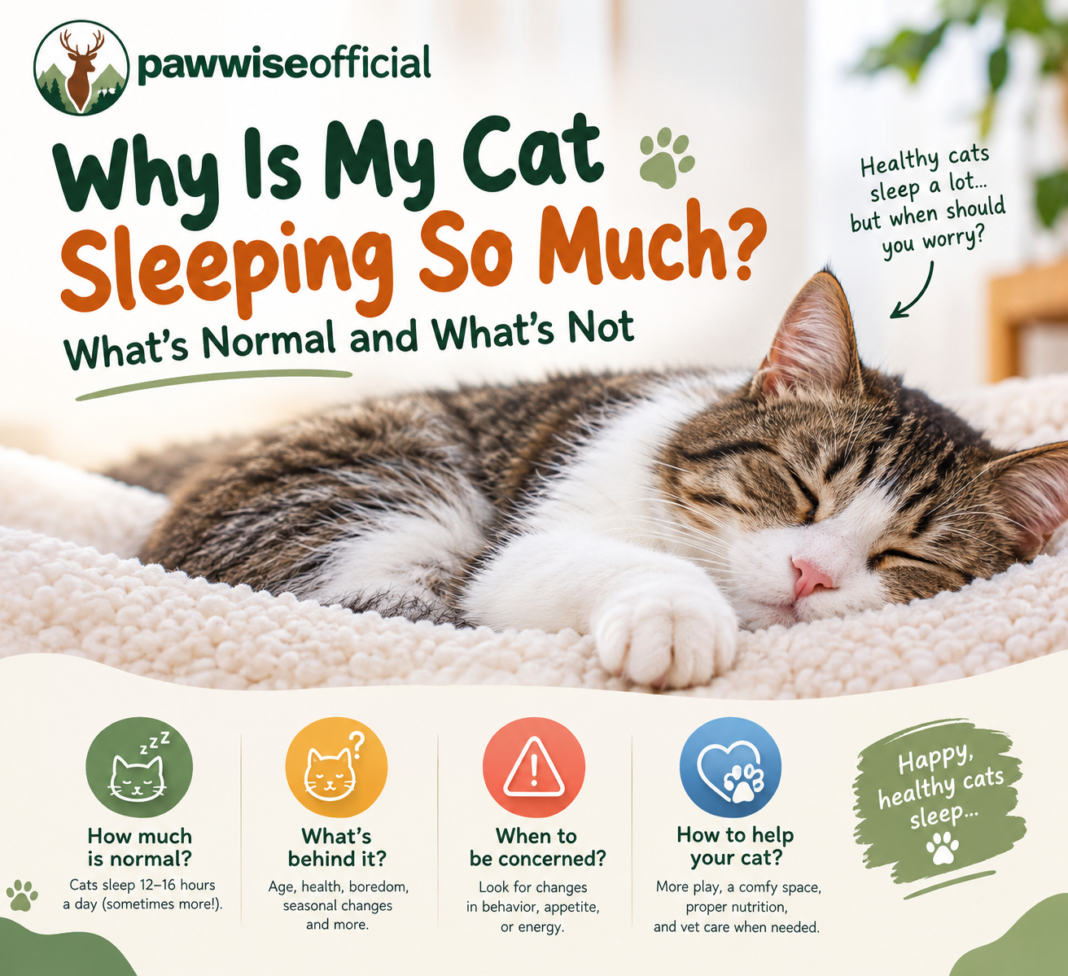
If you’ve ever looked over at your cat and thought, “Does my cat ever wake up?”, you’re definitely not alone.
Cats are professional sleepers. They can nap on the sofa, wake up for food, wander around for a few minutes, and then somehow find another comfortable spot for a second nap. Sometimes it feels like sleeping is their full-time job!
But how much sleep is actually normal for a cat? And when does sleeping too much become something you should pay attention to?
The truth is, cats naturally sleep a lot, and most of the time, there’s nothing to worry about. However, a sudden change in your cat’s sleeping habits can sometimes be a sign that something isn’t quite right.
So, let’s take a closer look at why cats sleep so much, how many hours cats normally sleep, and the warning signs that shouldn’t be ignored.
How Many Hours Do Cats Sleep?
Most adult cats sleep somewhere around 12 to 16 hours a day, although some cats may sleep even longer.
Yes, really!
Kittens and older cats often need more sleep than healthy adult cats. Some may spend 18 hours or more sleeping or resting throughout a day.
That might sound excessive to us, but remember, cats aren’t built like humans.
Cats are natural hunters. In the wild, they need bursts of energy for stalking, chasing, and catching prey. Resting between those activities helps them conserve energy.
Your indoor cat might not be chasing mice for dinner, but that instinct is still there.
So if your cat spends most of the afternoon curled up in a sunny window, don’t automatically assume something is wrong.
A cat that sleeps a lot can still be a perfectly healthy cat.
What matters more is how your cat sleeps and what they do when they’re awake.
Why Do Cats Sleep So Much?
There are several completely normal reasons behind your cat’s sleeping habits.
1. Cats Are Naturally Built for Rest
Cats are crepuscular animals, which means they tend to be more active around dawn and dusk.
This is one reason your cat might seem incredibly sleepy during the day, then suddenly decide that 2 a.m. is the perfect time to run around the house.
Sound familiar?
You’re trying to sleep, and suddenly you hear little paws racing down the hallway.
That nighttime energy is often completely normal.
Cats naturally conserve their energy during quieter parts of the day so they’re ready to become active when they feel most inclined.
2. Your Cat May Simply Be Comfortable
Sometimes, your cat is sleeping a lot because they feel safe.
Think about it.
Would a nervous cat stretch out completely in the middle of the living room and fall into a deep, relaxed sleep?
Probably not.
A cat that regularly chooses comfortable sleeping spots, stretches out, grooms themselves, wakes up normally, eats well, and interacts with you is often simply enjoying a comfortable life.
Your couch may have officially become their favorite sleeping place, and honestly, they probably think you bought it for them.
3. Kittens Need Lots of Sleep
If you have a kitten, don’t be surprised if they seem to spend most of the day asleep.
Growing is hard work.
Kittens need plenty of rest because their bodies and brains are developing rapidly. They may play intensely for a short period, become completely exhausted, and then fall asleep almost instantly.
It’s pretty adorable.
A healthy kitten will usually wake up for feeding, play, exploration, and interaction before settling down for another nap.
If your kitten is sleeping but wakes normally and behaves energetically when awake, that’s generally reassuring.
4. Older Cats Often Sleep More
As cats get older, it’s normal for their activity levels to change.
Senior cats may sleep more than they did when they were young. They may also prefer quieter activities, shorter play sessions, and longer periods of rest.
That’s not necessarily a problem.
However, don’t assume every change in an older cat is simply “because of age.”
Older cats can develop health problems that cause increased sleepiness or reduced activity. Regular veterinary checkups become especially important as your cat gets older.
How Do I Know If My Cat Is Sleeping Too Much?
This is where things get a little more complicated.
There isn’t one exact number of hours that means “your cat is sleeping too much.”
Instead of watching the clock, pay attention to your cat’s normal routine.
For example, imagine your cat usually sleeps for 14 hours a day. They wake up, eat breakfast, play with a toy, watch birds through the window, use the litter box, and generally act like themselves.
Then suddenly, they start sleeping almost all day, stop playing, don’t come when you open their food, and seem uninterested in everything around them.
That’s a meaningful change.
The biggest clue isn’t necessarily the number of hours your cat sleeps.
It’s a change in behavior.
Signs Your Cat May Be Sleeping Too Much
A sleepy cat isn’t automatically a sick cat. But excessive sleepiness can be concerning when it’s accompanied by other changes.
Keep an eye out for the following signs.
Your Cat Has Less Energy When Awake
Does your cat wake up but seem unusually tired?
Maybe they walk slowly, don’t want to play, or quickly return to bed.
If your normally energetic cat suddenly becomes extremely inactive, pay attention.
Your Cat Stops Playing
Cats don’t have to play all day, but most healthy cats have some interest in play, especially younger cats.
If your cat suddenly stops chasing toys, climbing, exploring, or interacting with you, something may be bothering them.
Your Cat Is Eating Less
Changes in appetite are important.
If your cat sleeps more and is also eating much less than normal, don’t simply assume they’re tired.
Loss of appetite can happen for many reasons, including stress, dental problems, digestive issues, and illness.
Your Cat Is Drinking More or Less
Keep an eye on the water bowl, too.
A noticeable increase or decrease in drinking can sometimes be associated with health problems.
You don’t need to obsessively measure every drop, but if you suddenly notice your cat spending much more time at the water bowl, or barely drinking at all, it’s worth discussing with your veterinarian.
Your Cat Stops Grooming
Cats are naturally clean animals.
Regular grooming is part of normal cat behavior, so a cat that suddenly stops grooming may not be feeling well.
You might notice a coat that looks greasy, messy, tangled, or unusually unkempt.
On the other hand, excessive grooming can also indicate a problem, particularly if your cat is constantly licking one area.
Your Cat Hides More Than Usual
Cats sometimes hide when they’re stressed, frightened, or uncomfortable.
If your cat suddenly starts spending most of the day under the bed, behind furniture, or in another unusual hiding place, take notice.
Again, the key is the change from their normal behavior.
Some cats are naturally shy and love hiding. That’s fine.
A sudden change is what matters.
Is It Normal for Cats to Sleep All Day?
It can be.
If your cat sleeps for much of the day but wakes up normally, eats well, uses the litter box, grooms themselves, plays occasionally, and behaves normally, their sleeping pattern may simply be part of their personality.
Cats don’t necessarily follow our daily schedule.
You might be working from home at noon while your cat is enjoying their fourth nap of the day.
Then, just when you’re ready for bed, they suddenly have a tremendous amount of energy.
Classic cat behavior.
Instead of asking, “Why is my cat sleeping all day?”, try asking:
“What does my cat act like when they’re awake?”
That question can tell you much more.
Why Is My Cat Sleeping More Than Usual?
If you’ve noticed that your cat is suddenly sleeping more than they normally do, there are several possible explanations.
Stress is one possibility.
Have you recently moved furniture, welcomed a new pet, had visitors, changed your cat’s routine, or moved to a new home?
Cats can be surprisingly sensitive to changes in their environment.
Weather can also influence activity. On hot days, cats may spend more time resting in cool places. During colder weather, your cat might happily curl up somewhere warm and stay there for hours.
But increased sleepiness can also occur with health problems.
Pain, infections, anemia, digestive problems, arthritis, dental disease, and other conditions can sometimes cause a cat to become less active.
That’s why a sudden or persistent change in your cat’s sleeping habits shouldn’t be ignored.
When Should You Call a Veterinarian?
You don’t need to panic every time your cat takes an extra nap.
However, if excessive sleeping comes with other unusual symptoms, it’s a good idea to contact your veterinarian.
Watch for signs such as:
- Loss of appetite
- Significant weight loss
- Repeated vomiting or diarrhea
- Difficulty breathing
- Trouble walking
- Signs of pain
- Hiding constantly
- Changes in litter box habits
- Drinking or urinating much more than usual
- Lack of interest in normal activities
- Weakness or difficulty getting up
- Sudden major changes in behavior
If your cat is difficult to wake, extremely weak, struggling to breathe, or showing other serious symptoms, seek veterinary care promptly.
When in doubt, it’s better to ask a professional.
How Can You Encourage Healthy Cat Sleep?
You don’t need to stop your cat from sleeping.
Sleep is an important part of a cat’s health.
Instead, focus on giving them a healthy lifestyle while they’re awake.
Make sure your cat has:
A comfortable sleeping area:
Cats love quiet, secure places where they can rest without being disturbed.
Daily play:
Interactive play helps keep your cat physically active and mentally stimulated.
A nutritious diet:
Feed a complete and balanced cat food that’s appropriate for your cat’s age and individual needs.
Mental stimulation:
Puzzle feeders, toys, scratching posts, climbing areas, and safe window views can help prevent boredom.
A predictable routine:
Cats often feel more comfortable when feeding, playtime, and other daily activities follow a familiar routine.
And don’t forget regular veterinary care.
A healthy lifestyle isn’t just about food and exercise. Routine health checks can help catch problems early.
Should I Wake My Cat Up?
Usually, no.
If your cat is sleeping comfortably and doesn’t have an urgent reason to wake up, let them rest.
Sleep is important for cats, particularly kittens, seniors, and cats recovering from stressful situations.
Of course, there are exceptions. If your cat is unusually difficult to wake or doesn’t respond normally, that’s different from simply being a sleepy cat.
A healthy sleeping cat should generally wake and respond normally when they naturally become active.
Frequently Asked Questions
How many hours do cats sleep a day?
Most adult cats sleep around 12 to 16 hours per day, although individual cats can sleep more or less. Kittens and senior cats often need additional rest.
Is it normal for my cat to sleep all day?
Yes, cats can spend much of the day sleeping or resting. The important thing is whether your cat behaves normally when awake.
Why is my cat sleeping more than usual?
Extra sleep can be caused by normal factors such as age, weather, stress, or changes in routine. However, sudden excessive sleepiness, especially with appetite or behavior changes, can sometimes indicate a health problem.
How do I know if my cat is sick or just sleepy?
Look at the bigger picture. A sick cat may show other changes, such as reduced appetite, hiding, poor grooming, vomiting, diarrhea, breathing problems, changes in litter box habits, or unusual weakness.
Do kittens sleep more than adult cats?
Yes. Kittens need plenty of sleep because their bodies and brains are still developing. It’s normal for a healthy kitten to sleep for long periods between feeding and bursts of play.
When should I worry about my cat sleeping too much?
You should be more concerned when your cat’s sleeping pattern changes suddenly or excessive sleepiness occurs alongside other symptoms. If your cat seems unusually weak, difficult to wake, or seriously unwell, contact a veterinarian promptly.