
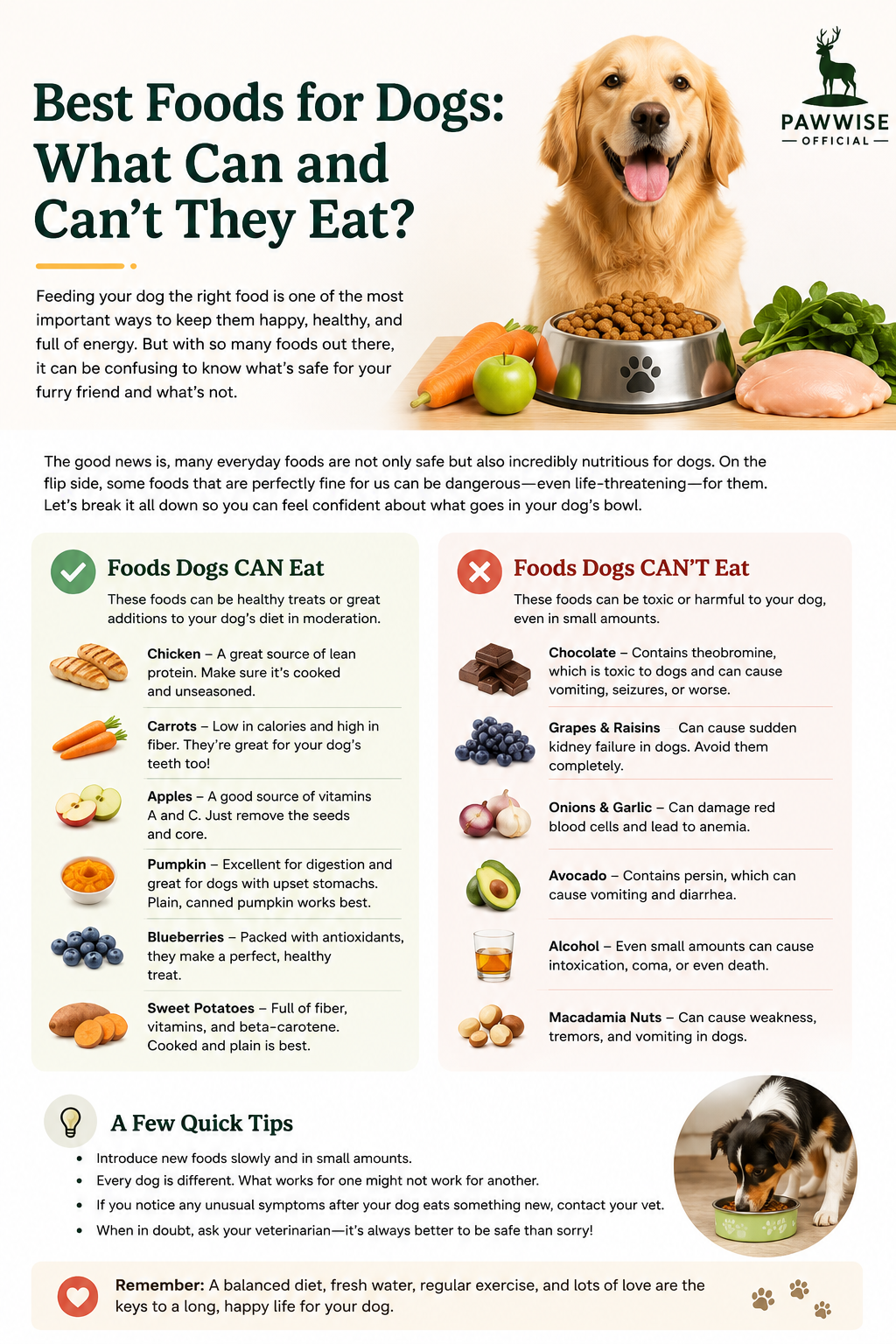
Best Foods for Dogs: What Can and Can’t They Eat?
If you have a dog, you already know how food works in their world.
You open a snack, they hear it.
You walk into the kitchen, they follow you.
You sit down for dinner, somehow, they’re already sitting at your feet.
And then comes the look, those big puppy eyes, the little head tilt, maybe even a paw on your leg. Basically, they’re asking, “Are you really going to eat all of that without sharing?”
We’ve all been there.
It’s completely normal to want to give your dog a little bite of whatever you’re eating. But here’s the problem, some human foods are perfectly safe for dogs, while others can make them seriously sick.
So, before you hand over that piece of food, it’s worth knowing what’s okay and what’s not.
In this guide, we’ll go through some of the best foods for dogs, the human foods they can enjoy occasionally, and the foods you should keep completely away from them.
First, What Should a Dog Actually Eat?
Let’s start with the basics.
Your dog’s main meals should generally come from a complete and balanced dog food that’s suitable for their age, size, and nutritional needs.
The extra foods we’re talking about here, chicken, carrots, fruit, eggs, and so on, are treats. They’re not meant to replace your dog’s normal meals.
Think of them as little extras.
And honestly, you don’t need to give your dog a huge amount. A few small pieces can be more than enough to make them happy.
Also, every dog is different. One dog might happily eat a piece of apple, while another might look at you like you’ve completely lost your mind.
That’s normal.
If your dog has allergies, a sensitive stomach, or any health condition, it’s a good idea to check with your vet before adding new foods to their diet.
Foods Dogs Can Eat
The good news is, there are plenty of foods that dogs can enjoy safely.
The trick is to keep them plain, properly prepared, and in small amounts.
Let’s look at some easy options.
1. Chicken
Most dogs don’t need much convincing when chicken is involved.
Plain, cooked chicken can be a tasty source of protein and a nice occasional treat.
You can give your dog a few small pieces, mix some into their regular food, or use it as a high-value training reward.
But, keep it plain.
Chicken covered in spicy seasoning, garlic, onions, butter, or a rich sauce isn’t the same thing.
And there’s one big rule here, never give your dog cooked chicken bones.
Cooked bones can splinter, and those sharp pieces can cause choking, injuries, or blockages.
So, chicken, yes.
Cooked chicken bones, absolutely not.
2. Carrots
Carrots are one of those foods that are simple, inexpensive, and easy to give your dog.
Some dogs love them raw because of the crunch. Others prefer them cooked and softer.
Either way, carrots can make a nice occasional snack.
They’re also relatively low in calories, which is helpful if you’re trying not to turn every treat into a tiny feast.
If your dog is small, cut the carrot into bite-sized pieces. You don’t want them trying to swallow a giant chunk.
And, if your dog doesn’t like carrots, don’t worry.
They’re a dog, not a vegetable critic.
3. Apples
Apples can be a nice crunchy treat for dogs.
Just don’t hand your dog a whole apple and call it a day.
Remove the core and seeds first, then cut the apple into small pieces.
A few pieces are plenty.
The sweet, crunchy texture is something many dogs enjoy, especially if they’re watching you eat one and wondering why they didn’t get any.
Just remember, apple is a treat, not a replacement for their regular food.
4. Blueberries
Blueberries are another easy option.
They’re small, naturally sweet, and contain antioxidants, so a few can make a nice little snack.
You can give them on their own, or toss a few into your dog’s regular food.
They’re also handy for training because you can give one at a time.
Just don’t get carried away.
If your dog discovers that blueberries are delicious, they may suddenly decide they need the entire container.
They don’t.
5. Pumpkin
Plain pumpkin can be useful for dogs because it’s a good source of fiber.
Some people give plain pumpkin when their dog has a mild digestive upset, although it’s important not to treat ongoing vomiting or diarrhea at home without veterinary advice.
If you’re giving pumpkin, make sure it’s plain.
Plain canned pumpkin is fine, as is cooked pumpkin without added ingredients.
What you don’t want is pumpkin pie filling.
That’s usually loaded with sugar and spices, and it’s not what your dog needs.
So, plain pumpkin, yes.
Pumpkin pie, save that one for yourself.
6. Sweet Potatoes
Sweet potatoes can also be a tasty treat.
Cook them first, let them cool, and cut them into small pieces.
That’s really all you need to do.
Don’t cover them in butter, sugar, salt, or seasoning. Those extras might make our food taste better, but your dog doesn’t need them.
In fact, dogs usually do just fine with simple food.
Sometimes, we’re the ones making things complicated.
7. Green Beans
Green beans are another food that many dogs can eat safely.
They can be served plain, either cooked or raw, as long as they’re prepared in a way that’s appropriate for your dog.
They’re especially useful if you want to give your dog something different without reaching for a fatty treat.
Just avoid green beans covered in butter, salt, sauces, onions, or garlic.
A few plain pieces are enough.
8. Eggs
Eggs can be a good source of protein, and some dogs absolutely love them.
A fully cooked, plain egg can be given occasionally.
Boiled eggs work, and plain scrambled eggs work too.
Just leave out the butter, salt, pepper, spices, onions, and other extras.
And make sure the egg is cooked properly.
If your dog sees you making breakfast, don’t be surprised if they suddenly appear in the kitchen.
They somehow always know.
9. Plain Rice
Plain, cooked rice is generally safe for dogs and is often easy for them to digest.
You may have heard that people give dogs rice when they have an upset stomach. Plain rice can sometimes be part of a temporary bland diet, but if your dog is repeatedly vomiting, has ongoing diarrhea, seems very weak, or simply isn’t acting like themselves, that’s a reason to contact a vet.
Also, there’s a big difference between plain rice and the rice we usually eat.
Plain rice, okay.
Fried rice with oil, spices, onions, garlic, and sauces, not so much.
10. Peanut Butter
Let’s be honest, peanut butter is basically dog magic.
Put a little on a spoon, and suddenly your dog is your best friend all over again.
A small amount can be used as an occasional treat, or you can put some inside a suitable dog toy.
But, before you do that, check the label.
Some peanut butter products contain xylitol, a sweetener that’s extremely dangerous for dogs.
Never give your dog peanut butter containing xylitol.
And even when the peanut butter is safe, don’t give too much. It’s high in fat and calories.
A little goes a long way.
What Fruits Can Dogs Eat?
Dogs can enjoy quite a few fruits, but again, small portions are the way to go.
Some fruits that are generally safe for dogs include:
- Bananas
- Blueberries
- Strawberries
- Apples, without the core and seeds
- Watermelon, without seeds and rind
- Cantaloupe
- Mango, without the pit
- Pears, without the seeds and core
Fruit can be a fun treat, especially when it’s hot outside.
But don’t let your dog convince you that they need an entire bowl.
Fruit contains natural sugar, and too much of anything can cause stomach trouble.
A few pieces, that’s enough.
Foods Dogs Should NOT Eat
Now, let’s talk about the foods that should never be treated as “just a little snack.”
Some foods that we eat regularly can be toxic to dogs.
And this is where it’s better to be safe than sorry.
1. Chocolate
Chocolate is one of the big ones.
Dogs should not eat it.
Chocolate contains theobromine and caffeine, which can be toxic to dogs. The risk depends on the type of chocolate, the amount eaten, and the size of the dog.
Dark chocolate and cocoa products can be especially dangerous.
If your dog steals chocolate from the kitchen, don’t sit around waiting for symptoms to appear.
Call your veterinarian or an appropriate animal poison service and ask what you should do.
Tell them what kind of chocolate your dog ate, approximately how much, and how big your dog is.
2. Grapes and Raisins
Grapes and raisins are another food to avoid completely.
They can cause serious kidney problems in dogs, and the difficult part is that we can’t reliably predict which dogs will become seriously ill or exactly how much will cause a problem.
So, it’s really not worth taking the chance.
No grapes.
No raisins.
And be careful with foods that contain raisins, too.
Cookies, breads, cereals, trail mixes, and other baked goods can sometimes contain them.
3. Onions and Garlic
Onions and garlic can be harmful to dogs, including powdered and dried versions.
They can damage red blood cells and potentially cause anemia.
The annoying part is, they’re found in so many foods.
That leftover meat might look harmless, but if it’s covered in seasoning, gravy, sauce, onion, or garlic, it’s better not to share it.
Your dog doesn’t know what’s in the food.
That’s our job to check.
4. Xylitol
If you have a dog, learn this word, xylitol.
It’s a sweetener used in some sugar-free products, including certain chewing gums, candies, baked goods, toothpaste, and some peanut and nut butters.
For dogs, xylitol can cause a dangerous drop in blood sugar and other serious complications.
So, whenever you’re thinking about giving your dog a human food product, take a quick look at the ingredients.
That tiny bit of label-checking can make a huge difference.
5. Alcohol
This one should be pretty straightforward, dogs should not drink alcohol.
Beer, wine, liquor, and other alcoholic drinks can be dangerous for dogs.
Even if your dog seems interested when you’re holding a drink, don’t give them a taste.
They don’t need it, and there’s no benefit to taking the risk.
Keep alcoholic drinks somewhere your dog can’t reach them, especially if you have a dog who likes to investigate everything.
6. Coffee and Caffeine
Your coffee might be your morning survival tool, but please don’t share it with your dog.
Coffee, tea, energy drinks, caffeine tablets, coffee grounds, and other caffeinated products can be dangerous.
If your dog is staring at you while you drink your coffee, give them a normal dog treat instead.
They’ll probably forget about your coffee pretty quickly.
7. Macadamia Nuts
Macadamia nuts aren’t safe for dogs either.
They can cause problems such as weakness, vomiting, tremors, and difficulty walking.
And don’t forget about foods that contain them.
A cookie or dessert might look harmless, but if it contains macadamia nuts, it isn’t something you should give your dog.
8. Raw Yeast Dough
Raw yeast dough is another one that people don’t always think about.
If a dog eats it, the dough can continue expanding in their stomach. Fermentation can also produce alcohol, which creates another risk.
So, if you’re making bread, pizza, or anything else involving yeast dough, keep it somewhere your dog can’t get to.
Because, trust me, if your dog gets the chance, they’ll probably investigate it.
Dogs have a talent for finding food.
9. Cooked Bones
We’ve already mentioned cooked chicken bones, but this deserves repeating.
Cooked bones can splinter and cause serious problems.
They can lead to choking, injuries, or intestinal blockages.
So, even if your dog sits there staring at you like you’ve personally betrayed them, don’t give them that leftover cooked bone.
There are safer dog chews available that are made specifically for them.
10. Very Fatty or Heavily Seasoned Foods
Dogs don’t need greasy, salty, heavily seasoned food.
A small bite of something rich might not cause a problem every time, but fatty foods can upset their stomach, and in some dogs, they can contribute to pancreatitis.
So, that greasy piece of leftover meat, the fried food, the buttery leftovers, or the heavily seasoned dinner, it’s better to skip it.
Your dog will survive without it.
I promise.
Can Dogs Eat Dairy?
This one depends on the dog.
Some dogs can handle small amounts of dairy, while others can’t handle it very well.
You might notice gas, loose stools, diarrhea, or an upset stomach after your dog eats dairy.
A small amount of plain yogurt or cheese may be okay for some dogs, but don’t assume every dog will react the same way.
And, once again, check the ingredients.
If a product contains xylitol, it’s a hard no.
What About Leftovers?
This is where things can get tricky.
Some leftovers are perfectly fine, but many aren’t.
The problem is usually not the basic food itself, it’s everything we’ve added to it.
Our meals often contain salt, spices, butter, oil, onions, garlic, sauces, and other ingredients that dogs don’t need.
So, if you’re cooking chicken for dinner, you could set aside a small piece for your dog before adding all your seasonings.
That plain piece is very different from the finished dish sitting on your plate.
It’s a simple habit, and it can save you from wondering later whether your dog should have eaten it.
What If Your Dog Eats Something They Shouldn’t?
First, take a breath.
Dogs are quick.
One second you’re making dinner, the next second they’re standing there with something they absolutely weren’t supposed to have.
If your dog eats a potentially dangerous food, remove whatever is left and contact your veterinarian or an animal poison-control service as soon as possible.
Don’t try to make your dog vomit unless a veterinary professional specifically tells you to.
Some substances can cause more damage if they come back up.
When you call, try to have some basic information ready:
- What your dog ate
- How much they may have eaten
- When they ate it
- Your dog’s approximate weight
- The product packaging or ingredient list, if you have it
- Any symptoms you’re noticing
Don’t be embarrassed to call.
Even if you aren’t sure whether something is dangerous, it’s better to ask.
A Simple Way to Remember What Dogs Can Eat
When you’re standing in the kitchen wondering whether you can give your dog something, keep it simple.
Ask yourself, Is it plain? Is it safe? And am I giving only a small amount?
Plain cooked chicken, generally yes.
A few blueberries, yes.
A little carrot, yes.
Plain pumpkin, generally yes.
Chocolate, no.
Grapes and raisins, no.
Onions and garlic, no.
Xylitol, absolutely no.
Alcohol and caffeine, no.
And cooked bones, definitely not.
You don’t have to stop sharing food with your dog completely.
You just need to be a little more careful about what you’re sharing.
PawWiseOfficial is here to help you make simple, practical, and safer choices for your four-legged family member, one paw at a time.