Home Blog

Why Is My Cat Drinking So Much Water? Common Reasons

0

Have you noticed your cat spending a lot more time at the water bowl lately?

Maybe you’re filling the bowl in the morning, only to find it nearly empty by evening. Or perhaps your cat suddenly seems obsessed with the water fountain, visiting it again and again throughout the day.

Naturally, you might start wondering, “Why is my cat drinking so much water?”

Sometimes, increased water intake is completely normal. Your cat may have eaten more dry food than usual, played more on a hot day, or simply been thirstier than normal.

But, in some cases, excessive thirst in cats can be a sign of an underlying health problem.

The tricky part is knowing the difference.

Cats aren’t always obvious when something is wrong. They can hide discomfort remarkably well, which means changes in everyday habits, including drinking more water, are worth paying attention to.

In this guide, we’ll look at the common reasons your cat may be drinking more water, what normal cat drinking habits look like, and when it’s time to call the veterinarian.

How Much Water Should a Cat Drink?

Before worrying about how much your cat is drinking, it helps to understand that every cat is different.

A cat’s water needs can depend on their size, diet, activity level, age, health, and even the weather.

Cats that eat mostly wet food often drink less directly from their water bowl because wet food contains a significant amount of moisture.

On the other hand, cats that eat primarily dry food may drink more from their bowl because they’re getting less water through their food.

So, if your cat eats dry kibble and visits the water bowl regularly, that isn’t necessarily a problem.

The bigger concern is a noticeable change from your cat’s usual drinking habits.

If your cat has suddenly started drinking much more than they normally do, it’s worth finding out why.

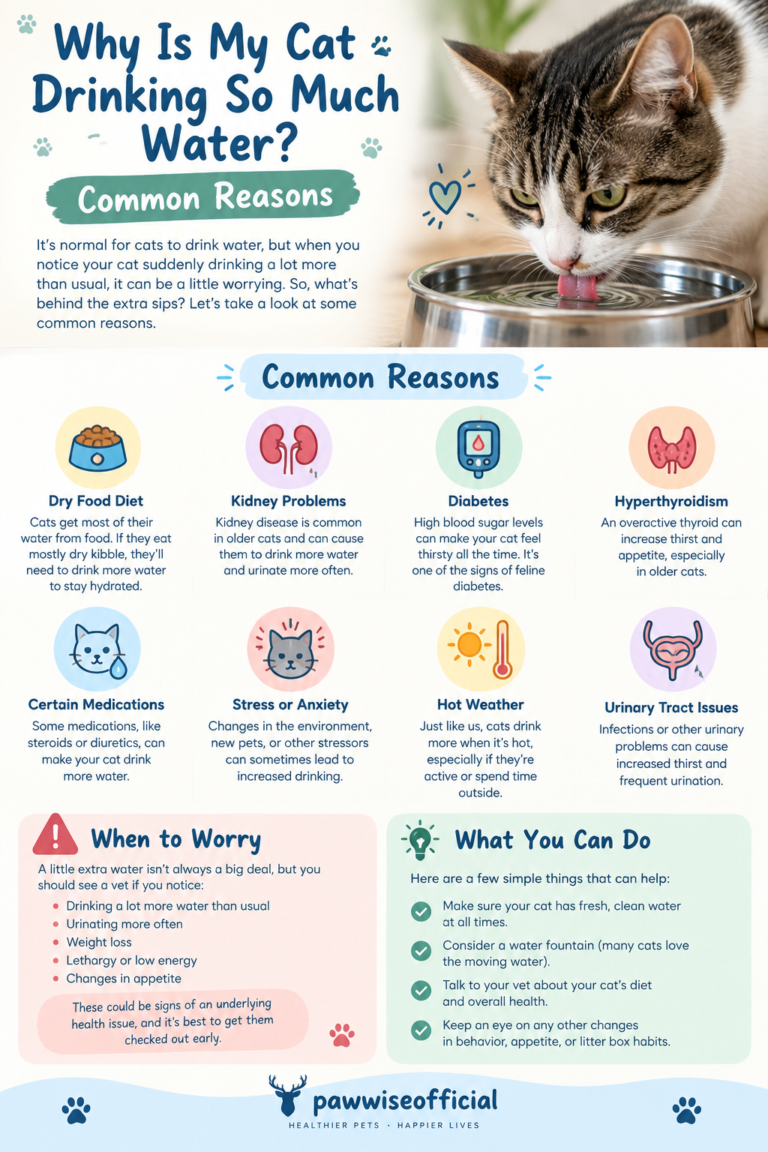
1. Your Cat Eats Mostly Dry Food

One of the simplest explanations for increased drinking is your cat’s diet.

Dry cat food contains much less moisture than wet food, so cats eating mostly kibble generally need to get more of their daily water from drinking.

This is completely normal.

If you’ve recently changed your cat from wet food to dry food, or increased the amount of dry food they’re eating, you may notice them drinking more.

On the other hand, a cat that eats wet food and suddenly starts drinking large amounts of water deserves a little more attention.

It’s not always a sign of illness, but a sudden change is worth discussing with your veterinarian.

2. It’s Hot Outside

Just like people, cats can drink more when the weather gets hot.

During warm weather, your cat may lose more moisture and naturally seek out more water to stay hydrated.

You might notice them drinking more frequently, sleeping in cooler areas, or stretching out on a cool floor.

Indoor cats can also be affected by hot temperatures, particularly if the room isn’t well ventilated.

Make sure your cat always has access to fresh, clean water.

If you have multiple cats, providing several water bowls around the home can also make it easier for everyone to drink comfortably.

And if your cat loves a water fountain, that’s perfectly fine, too.

Some cats seem to think moving water is much more exciting than ordinary water sitting in a bowl.

3. Your Cat Has Been More Active

Has your cat suddenly decided to turn your living room into a racetrack?

Maybe you’ve introduced a new toy, started playing with them more often, or your cat has simply been more active lately.

Increased activity can lead to increased water consumption.

This is generally nothing to worry about if your cat is otherwise healthy and the increased drinking makes sense based on their activity level.

After all, a cat that spends an hour chasing a toy around the house is going to need to replace some of that lost moisture.

4. Stress or Changes in Routine

Cats can be surprisingly sensitive to changes.

Moving to a new home, introducing another pet, having visitors, changing feeding times, or even rearranging furniture can affect some cats.

Stress doesn’t always look like obvious fear.

Your cat may become more vocal, hide more often, groom excessively, change their eating habits, or behave differently around the water bowl.

If your cat’s increased drinking started around the same time as a major change at home, stress could potentially be contributing.

Still, don’t automatically blame stress if your cat is drinking significantly more water.

It’s important to consider medical causes, too, especially if the change continues.

5. Kidney Problems

One medical reason for increased thirst in cats is kidney disease.

The kidneys help regulate fluid balance and remove waste products from the body. When kidney function becomes impaired, some cats may urinate more and, as a result, drink more water.

This is particularly important to keep in mind with older cats.

Other possible signs can include:

  • Increased urination
  • Weight loss
  • Reduced appetite
  • Vomiting
  • Low energy
  • Poor coat condition
  • Changes in behavior

These symptoms can have many possible causes, so they don’t automatically mean your cat has kidney disease.

However, if an older cat starts drinking and urinating much more than usual, a veterinary examination is a good idea.

6. Diabetes Can Cause Increased Thirst

Diabetes is another condition that can cause a cat to drink more water and urinate more frequently.

When blood sugar levels remain too high, the body may try to remove excess glucose through the urine. This can lead to increased urination and, consequently, increased thirst.

Some cats with diabetes may also lose weight despite having a normal or increased appetite.

You may notice that your cat:

  • Drinks frequently
  • Uses the litter box more often
  • Loses weight
  • Seems hungrier than usual
  • Becomes less energetic

If you notice this combination of symptoms, don’t wait too long to contact your veterinarian.

Diabetes can often be managed with appropriate veterinary care, but it needs proper diagnosis and treatment.

7. Hyperthyroidism May Be the Reason

Hyperthyroidism is a condition that is more commonly seen in older cats.

It occurs when the thyroid gland produces too much thyroid hormone.

Cats with hyperthyroidism may show several changes, including increased appetite, weight loss, restlessness, vomiting, diarrhea, increased drinking, and increased urination.

Some cats become unusually energetic or vocal.

Others simply don’t seem like themselves.

Because these signs can overlap with other conditions, your veterinarian may recommend blood testing to determine what’s actually happening.

If your senior cat seems to be eating more but losing weight, drinking more, or becoming unusually restless, it’s worth getting them checked.

8. Certain Medications Can Increase Thirst

Some medications can cause increased thirst or urination as a side effect.

If your cat has recently started taking medication and you’ve noticed them drinking more, don’t immediately stop the medication.

Instead, contact your veterinarian and explain what you’ve noticed.

Your vet can tell you whether the change is an expected side effect or whether your cat needs to be examined.

This is especially important if the increased thirst is severe or accompanied by other symptoms.

9. Your Cat Could Be Dehydrated

It might seem strange, but increased drinking can sometimes occur when a cat is trying to replace lost fluids.

Dehydration can happen for several reasons, including vomiting, diarrhea, fever, reduced food intake, or excessive fluid loss.

A dehydrated cat may appear tired, weak, or less interested in food.

Their gums may also feel dry or sticky rather than moist.

If you suspect your cat is dehydrated, especially if they have been vomiting or experiencing diarrhea, contact your veterinarian.

Don’t try to force large amounts of water into your cat.

Instead, make fresh water easily available and seek professional advice.

10. Your Cat Simply Likes Drinking Water

Yes, sometimes the explanation really is that simple.

Some cats naturally drink more than others.

If your cat has always been a frequent drinker, has a stable weight, eats normally, uses the litter box normally, and behaves like themselves, their drinking habits may simply be normal for them.

This is why knowing your cat’s baseline is so useful.

A cat that has always drunk a lot is different from a cat that suddenly starts drinking a lot.

The change is often more important than the number itself.

How Can You Tell If Your Cat Is Drinking Too Much Water?

This can be difficult because most people don’t measure their cat’s water intake.

You don’t need to turn your home into a science laboratory, though.

Instead, watch for noticeable changes.

For example:

  • The water bowl becomes empty much faster
  • Your cat visits the bowl repeatedly
  • You find them drinking from unusual places
  • They’re suddenly interested in sinks or taps
  • They’re urinating more often
  • The litter box becomes much wetter than usual

If you have multiple cats, it can be even harder to know how much each cat drinks.

In that situation, separate water bowls or a water fountain with individual monitoring can sometimes help you notice changes.

Is Drinking a Lot of Water Always a Sign of Illness?

No.

A cat may drink more because of warm weather, increased activity, a dry-food diet, or other harmless reasons.

However, persistent excessive thirst in cats is something you shouldn’t ignore.

If your cat is drinking significantly more water than usual for several days, especially if they’re also urinating more, losing weight, eating differently, or acting tired, contact your veterinarian.

You don’t need to wait until your cat looks seriously ill.

Early veterinary attention can sometimes make it easier to identify what’s causing the change.

Why Is My Cat Drinking More and Peeing More?

This combination deserves particular attention.

Increased drinking and increased urination can happen for several reasons, including kidney disease, diabetes, hyperthyroidism, certain medications, and other medical conditions.

It doesn’t mean your cat definitely has one of these problems.

But if you notice both changes at the same time, it’s a good reason to schedule a veterinary checkup.

Your veterinarian may ask questions about your cat’s diet, appetite, weight, energy level, litter box habits, and recent behavior.

Blood and urine tests may also be recommended, depending on your cat’s symptoms and age.

What Can You Do at Home?

The first thing is simple, make sure your cat has access to clean, fresh water at all times.

You can make drinking more appealing by:

  • Cleaning the water bowl regularly
  • Offering more than one water station
  • Trying a cat water fountain
  • Keeping water away from dirty litter boxes
  • Experimenting with different bowl shapes
  • Providing wet cat food if appropriate for your cat’s diet

Some cats are picky about their water.

They may happily drink from a ceramic bowl but ignore a plastic one. Another cat might prefer running water from a fountain.

Cats can have strong opinions about surprisingly small things.

If your cat likes one setup, there’s no need to change it just because another option looks nicer to you.

Should You Limit Your Cat’s Water?

No, don’t restrict your cat’s access to water unless your veterinarian specifically tells you to do so.

If your cat is drinking more because of an underlying health issue, restricting water could make dehydration worse.

Fresh water should generally be available throughout the day.

If you’re concerned about how much your cat is drinking, focus on monitoring the change and speaking with your veterinarian rather than trying to reduce their water intake yourself.

When Should You Take Your Cat to the Vet?

If your cat suddenly starts drinking much more water than usual, it’s worth paying attention.

A veterinary visit becomes particularly important if increased thirst occurs alongside:

  • Increased urination
  • Weight loss
  • Loss of appetite
  • Increased hunger
  • Vomiting
  • Diarrhea
  • Weakness
  • Sleeping much more than usual
  • Poor grooming
  • Changes in behavior
  • Dehydration
  • A dull or unhealthy-looking coat

If your cat seems seriously ill, extremely weak, or has difficulty breathing or urinating, seek veterinary care promptly.

Don’t wait for the excessive drinking to disappear on its own if your cat is showing multiple concerning symptoms.

How Can You Monitor Your Cat’s Water Intake?

If you’re worried about your cat’s drinking habits, keeping a simple record can be surprisingly helpful.

For a few days, note:

How often your cat drinks

How quickly the water bowl empties

How often they use the litter box

Whether they’re eating normally

Any changes in weight or behavior

You don’t have to become obsessed with measuring every milliliter.

Just look for patterns.

If you end up visiting your veterinarian, these observations can give them useful information about what has changed.

Frequently Asked Questions

Why is my cat drinking so much water all of a sudden?
A sudden increase in water intake can have simple causes, such as hot weather, increased activity, or a diet change. However, persistent excessive thirst can sometimes be associated with conditions such as kidney disease, diabetes, or hyperthyroidism. A noticeable change should be discussed with your veterinarian.

How much water should a cat drink each day?
Water needs vary depending on a cat’s size, diet, activity, and health. Cats that eat wet food often drink less directly from their bowl because they receive moisture through their food.

Is it normal for cats to drink a lot of water?
Some cats naturally drink more than others. What matters most is whether your cat’s water intake has changed noticeably from their normal routine.

Why is my cat drinking more water and peeing more?
Increased drinking and urination can have several causes, including dietary changes, medication effects, kidney problems, diabetes, and hyperthyroidism. If both changes persist, contact your veterinarian.

Should I be worried if my older cat is drinking more water?
A noticeable increase in drinking in a senior cat deserves attention. Older cats can be more susceptible to certain health conditions that may cause increased thirst and urination, so a veterinary checkup is recommended if the change continues.

Can dry cat food make my cat drink more water?
Yes. Dry food contains less moisture than wet food, so cats eating mostly dry food may naturally drink more water to meet their hydration needs.

How can I encourage my cat to drink more water?
Keep fresh water available, clean the bowl regularly, provide multiple water stations, and consider a cat water fountain if your cat enjoys moving water. Wet food can also contribute moisture to your cat’s diet when appropriate.

When should I worry about my cat drinking too much water?
Be more concerned if the increase is sudden, persistent, or accompanied by weight loss, appetite changes, increased urination, vomiting, diarrhea, weakness, or unusual behavior. In these situations, contact your veterinarian.
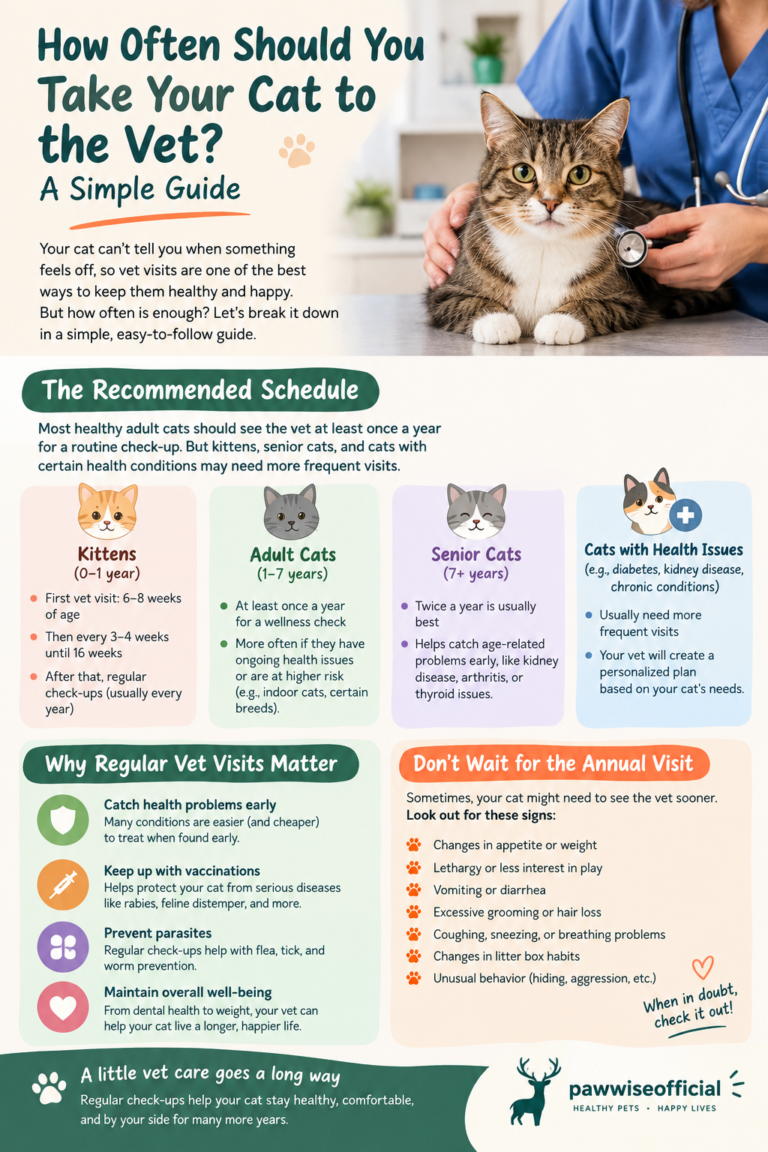
How Often Should You Take Your Cat to the Vet? A Simple Guide

0

If your cat looks perfectly healthy, eats normally, plays when they feel like it, and spends most of the day sleeping in their favorite spot, you might wonder, “Does my cat really need to go to the vet that often?”

It’s a fair question.

Cats are incredibly good at hiding discomfort, and that’s one of the reasons regular veterinary checkups are so important. Your cat may look completely fine on the outside while a small health problem is quietly developing.

So, how often should you take your cat to the vet?

For most healthy adult cats, a veterinary checkup at least once a year is a reasonable general guideline. However, kittens, senior cats, and cats with ongoing health problems may need to visit the veterinarian more often.

The right schedule depends on your cat’s age, lifestyle, medical history, and individual needs.

Let’s break it down, so you know what to expect, and when that next vet visit should be on your calendar.

How Often Should a Healthy Cat Go to the Vet?

For a healthy adult cat, an annual veterinary exam is commonly recommended.

Think of it as your cat’s yearly health checkup.

Even if your cat seems perfectly healthy, the veterinarian can look for problems you might not notice at home. A routine examination may include checking your cat’s:

  • Weight and body condition
  • Eyes and ears
  • Teeth and gums
  • Skin and coat
  • Heart and lungs
  • Abdomen
  • Joints and movement
  • Overall behavior and physical condition

Your veterinarian can also discuss vaccinations, parasite prevention, nutrition, dental care, and other aspects of preventive cat care.

And no, your cat probably won’t appreciate the trip.

They may complain loudly in the carrier, give you the silent treatment afterward, and act as though you’ve betrayed the entire family.

But regular vet visits are one of the best things you can do for your cat’s long-term health.

How Often Should Kittens Go to the Vet?

Kittens usually need more frequent veterinary visits than adult cats.

Why?

Because the first year of a kitten’s life is full of important changes.

During kitten vet visits, your veterinarian can monitor growth, discuss nutrition, check for parasites, recommend vaccinations, and help you establish a healthy care routine.

Vaccinations are particularly important during kittenhood, as young cats need protection against several infectious diseases.

Your veterinarian will create a vaccination schedule based on your kitten’s age, health, lifestyle, and local recommendations.

Kitten visits are also a great time to ask questions.

Not sure how much your kitten should eat?

Wondering when to start brushing their teeth?

Confused about litter box behavior?

Ask.

There really is no such thing as a silly question when you’re trying to take good care of a new kitten.

What About Adult Cats?

Once your cat reaches adulthood, their veterinary schedule may become less frequent than during kittenhood.

For many healthy adult cats, yearly checkups are a useful routine.

During these visits, your veterinarian can monitor changes over time.

And that’s something people sometimes overlook.

A single checkup gives your vet a snapshot of your cat’s health. Regular visits create a history.

If your cat weighed 4.5 kg last year and suddenly weighs 5.5 kg this year, that change may be worth discussing.

Likewise, a gradual change in dental health, muscle condition, or mobility may be easier to spot when your veterinarian has previous records to compare.

Preventive care is often about catching small changes before they become big problems.

Do Senior Cats Need More Frequent Vet Visits?

Often, yes.

As cats get older, their healthcare needs can change.

Senior cats may be more likely to develop conditions involving their joints, teeth, kidneys, thyroid, or other parts of the body. Regular veterinary monitoring can help identify changes earlier.

Depending on your cat’s age and health, your veterinarian may recommend checkups more frequently than once a year.

Don’t assume that sleeping more, moving less, or becoming thinner is simply “old age.”

Sometimes it is age-related, but sometimes it can be a sign of an underlying health problem.

Older cats deserve extra attention because they may still be hiding discomfort.

Your senior cat might not suddenly announce, “Hey, my joints hurt today.”

Instead, you may notice that they no longer jump onto the sofa, avoid stairs, groom themselves less, or spend more time resting.

Those small changes matter.

Indoor Cats Need Vet Visits Too

One of the most common misconceptions about cat care is that indoor cats don’t need regular veterinary checkups.

They do.

Yes, indoor cats generally have fewer outdoor risks, but they can still develop health problems.

Indoor cats can experience:

  • Dental disease
  • Obesity
  • Arthritis
  • Parasites
  • Skin problems
  • Digestive problems
  • Urinary issues
  • Respiratory infections
  • Other age-related health conditions

Your cat doesn’t need to go outside to become sick.

In fact, indoor cats can sometimes gain weight because they have fewer opportunities for natural exercise.

Regular cat health checkups give you an opportunity to discuss weight management, diet, exercise, enrichment, and preventive care.

What Happens During a Cat Vet Visit?

If your cat hasn’t visited a veterinarian recently, you may be wondering what actually happens during a routine checkup.

Usually, the visit starts with questions about your cat’s everyday life.

Your veterinarian may ask:

How is your cat eating?

Have you noticed any weight changes?

How much water are they drinking?

Are they using the litter box normally?

Have you noticed vomiting or diarrhea?

Are they still playing and behaving normally?

This is why paying attention to your cat’s daily habits is so useful.

You are the person who sees your cat every day, so your observations can provide valuable information.

The veterinarian will then perform a physical examination and may recommend vaccinations, parasite prevention, dental care, blood tests, urine testing, or other diagnostics depending on your cat’s age and individual situation.

Not every cat needs every test at every visit.

Your veterinarian can help determine what’s appropriate.

Why Are Regular Cat Checkups Important?

Cats are masters of hiding signs of illness.

This behavior goes back to their natural instincts. In the wild, showing weakness can make an animal more vulnerable.

Your pampered indoor cat isn’t living in the wild, of course, but those instincts haven’t disappeared.

A cat can have a developing health problem without making it obvious.

By the time you notice a major change, the problem may already be more advanced.

That’s why preventive care for cats matters.

Routine examinations can help your veterinarian identify subtle changes in your cat’s health and give you an opportunity to discuss concerns before they become bigger issues.

It’s much easier to manage your cat’s health when you catch potential problems early.

Don’t Wait for the Annual Checkup If Something Seems Wrong

An annual appointment is a routine schedule, not a rule that says you have to wait until next year.

If your cat suddenly seems unwell, contact your veterinarian.

For example, don’t wait months if your cat suddenly:

  • Stops eating
  • Starts vomiting repeatedly
  • Has persistent diarrhea
  • Drinks significantly more water
  • Urinates much more or less than usual
  • Struggles to urinate
  • Loses weight unexpectedly
  • Becomes unusually tired
  • Hides constantly
  • Stops grooming
  • Has trouble walking
  • Shows obvious signs of pain
  • Develops breathing problems

Some symptoms may be minor, while others can be emergencies.

One particularly important situation is difficulty urinating.

If your cat repeatedly goes to the litter box, strains, cries, or produces little or no urine, seek veterinary attention immediately. Urinary blockage can become life-threatening, particularly in male cats.

When something feels seriously wrong, don’t wait for the next scheduled checkup.

How Can You Make Vet Visits Less Stressful?

Let’s be honest, many cats absolutely hate the veterinarian.

The carrier appears, and suddenly your sweet little angel becomes a highly skilled escape artist.

Fortunately, there are things you can do to make cat vet visits easier.

Get Your Cat Used to the Carrier

Don’t only bring the carrier out five minutes before leaving.

If the carrier is stored away all year and only appears before a stressful car ride, your cat may quickly learn that the carrier means, “Something terrible is about to happen.”

Instead, leave the carrier somewhere accessible.

Put a comfortable blanket inside and occasionally place treats or toys nearby.

Let your cat investigate it on their own.

Keep the Journey Calm

Avoid unnecessary noise and sudden movements.

A familiar blanket can help your cat feel more secure. Some cats also feel more comfortable when their carrier is partially covered with a light towel, as long as ventilation remains good.

Stay Calm Yourself

Cats are surprisingly good at picking up on our emotions.

If you’re stressed and rushing around, your cat may become even more anxious.

Take your time.

Prepare the carrier, gather your cat’s records, and leave early enough that you don’t have to race to the clinic.

What About Vaccinations?

Vaccinations are an important part of preventive cat care.

The exact vaccination schedule depends on your cat’s age, health, lifestyle, previous vaccination history, and local veterinary recommendations.

Kittens generally need a series of vaccinations during their early months, followed by booster vaccinations as recommended by their veterinarian.

Adult cats may also need ongoing vaccination according to their individual risk and local guidelines.

Your veterinarian can help determine which vaccines your cat needs and how often they should be given.

Don’t assume that an indoor-only cat automatically needs no vaccinations.

Their risk may be different from an outdoor cat, but it isn’t necessarily zero.

Should You Take Your Cat to the Vet for Dental Care?

Absolutely.

Dental health is an often-overlooked part of cat care.

Cats can develop plaque, tartar, gum inflammation, and dental disease, and many won’t make a dramatic fuss about it.

You might not realize anything is wrong until the problem becomes painful.

Watch for signs such as:

  • Bad breath
  • Drooling
  • Difficulty chewing
  • Dropping food
  • Pawing at the mouth
  • Red or swollen gums
  • Reduced appetite
  • Avoiding hard food

Regular veterinary examinations can help your veterinarian monitor your cat’s teeth and gums.

At home, you can also ask your veterinarian about appropriate dental-care options for your cat.

How Much Does a Cat Vet Visit Cost?

The cost of a cat vet visit can vary significantly depending on where you live, the clinic you choose, your cat’s age, and what services are needed.

A basic wellness exam is usually less expensive than a visit that requires diagnostic testing or treatment.

Vaccinations, blood tests, dental procedures, medications, and emergency care can all add to the total cost.

Instead of focusing only on the price of one visit, think about veterinary care as part of your cat’s overall health budget.

Regular preventive care may help identify problems earlier, when they can sometimes be easier to manage.

If you’re worried about costs, ask the clinic about pricing before non-emergency procedures are performed.

A Simple Cat Vet Visit Schedule

Here’s a simple way to think about veterinary care:

Kittens:
More frequent visits during the first year for health checks, vaccinations, growth monitoring, and other essential care.

Healthy adult cats:
Generally, at least one wellness examination each year, unless your veterinarian recommends a different schedule.

Senior cats:
Potentially more frequent checkups, depending on age, health status, and your veterinarian’s recommendations.

Cats with chronic health conditions:
Follow the schedule recommended by your veterinarian. Some cats may need regular monitoring, medication adjustments, or diagnostic tests.

Any cat showing concerning symptoms:
Don’t wait for the next routine appointment. Contact your veterinarian.

How to Prepare for Your Cat’s Vet Appointment

A little preparation can make the appointment much more useful.

Before you leave home, think about your cat’s recent behavior.

Has their appetite changed?

Are they drinking more water?

Have you noticed anything different in the litter box?

Are they sleeping more?

Have they started hiding?

Are they grooming normally?

Writing down your questions can help, especially if you tend to forget them once you’re sitting in the examination room.

If possible, also keep track of your cat’s medications, supplements, vaccination history, and previous medical information.

The more useful information your veterinarian has, the better they can understand your cat.

Frequently Asked Questions

How often should an indoor cat go to the vet?
A healthy indoor adult cat should generally have at least one wellness examination each year, although the ideal schedule depends on age, health, lifestyle, and veterinary recommendations.

Do cats really need yearly checkups?
Yes. Cats can hide signs of illness, so routine veterinary examinations can help identify health changes that may not be obvious at home.

How often should kittens visit the vet?
Kittens generally need several veterinary visits during their first year for health monitoring, vaccinations, parasite care, and other essential preventive care.

Do older cats need to see a veterinarian more often?
Senior cats may benefit from more frequent examinations because their risk of certain age-related health problems can increase. Your veterinarian can recommend an appropriate schedule.

Should I take my cat to the vet if they are sleeping more?
If your cat is sleeping more than usual, look for other changes, such as reduced appetite, hiding, weakness, weight loss, or changes in litter box habits. If the change is sudden or persistent, contact your veterinarian.

What are signs my cat needs a vet?
Loss of appetite, repeated vomiting, difficulty urinating, breathing problems, sudden weight loss, unusual weakness, persistent diarrhea, significant behavioral changes, and obvious signs of pain are all reasons to contact a veterinarian.

Can indoor cats skip vaccinations?
Not necessarily. Vaccination needs depend on your cat’s individual risk, age, health, and local recommendations. Discuss your cat’s vaccination schedule with your veterinarian.

Why Is My Cat Sleeping So Much? What’s Normal and What’s Not

0

If you’ve ever looked over at your cat and thought, “Does my cat ever wake up?”, you’re definitely not alone.

Cats are professional sleepers. They can nap on the sofa, wake up for food, wander around for a few minutes, and then somehow find another comfortable spot for a second nap. Sometimes it feels like sleeping is their full-time job!

But how much sleep is actually normal for a cat? And when does sleeping too much become something you should pay attention to?

The truth is, cats naturally sleep a lot, and most of the time, there’s nothing to worry about. However, a sudden change in your cat’s sleeping habits can sometimes be a sign that something isn’t quite right.

So, let’s take a closer look at why cats sleep so much, how many hours cats normally sleep, and the warning signs that shouldn’t be ignored.

How Many Hours Do Cats Sleep?

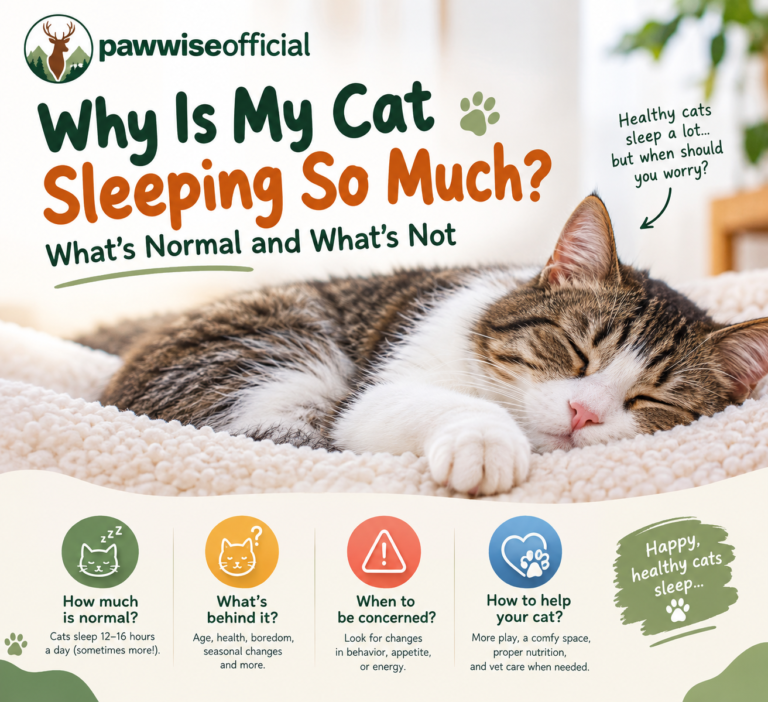
Most adult cats sleep somewhere around 12 to 16 hours a day, although some cats may sleep even longer.

Yes, really!

Kittens and older cats often need more sleep than healthy adult cats. Some may spend 18 hours or more sleeping or resting throughout a day.

That might sound excessive to us, but remember, cats aren’t built like humans.

Cats are natural hunters. In the wild, they need bursts of energy for stalking, chasing, and catching prey. Resting between those activities helps them conserve energy.

Your indoor cat might not be chasing mice for dinner, but that instinct is still there.

So if your cat spends most of the afternoon curled up in a sunny window, don’t automatically assume something is wrong.

A cat that sleeps a lot can still be a perfectly healthy cat.

What matters more is how your cat sleeps and what they do when they’re awake.

Why Do Cats Sleep So Much?

There are several completely normal reasons behind your cat’s sleeping habits.

1. Cats Are Naturally Built for Rest

Cats are crepuscular animals, which means they tend to be more active around dawn and dusk.

This is one reason your cat might seem incredibly sleepy during the day, then suddenly decide that 2 a.m. is the perfect time to run around the house.

Sound familiar?

You’re trying to sleep, and suddenly you hear little paws racing down the hallway.

That nighttime energy is often completely normal.

Cats naturally conserve their energy during quieter parts of the day so they’re ready to become active when they feel most inclined.

2. Your Cat May Simply Be Comfortable

Sometimes, your cat is sleeping a lot because they feel safe.

Think about it.

Would a nervous cat stretch out completely in the middle of the living room and fall into a deep, relaxed sleep?

Probably not.

A cat that regularly chooses comfortable sleeping spots, stretches out, grooms themselves, wakes up normally, eats well, and interacts with you is often simply enjoying a comfortable life.

Your couch may have officially become their favorite sleeping place, and honestly, they probably think you bought it for them.

3. Kittens Need Lots of Sleep

If you have a kitten, don’t be surprised if they seem to spend most of the day asleep.

Growing is hard work.

Kittens need plenty of rest because their bodies and brains are developing rapidly. They may play intensely for a short period, become completely exhausted, and then fall asleep almost instantly.

It’s pretty adorable.

A healthy kitten will usually wake up for feeding, play, exploration, and interaction before settling down for another nap.

If your kitten is sleeping but wakes normally and behaves energetically when awake, that’s generally reassuring.

4. Older Cats Often Sleep More

As cats get older, it’s normal for their activity levels to change.

Senior cats may sleep more than they did when they were young. They may also prefer quieter activities, shorter play sessions, and longer periods of rest.

That’s not necessarily a problem.

However, don’t assume every change in an older cat is simply “because of age.”

Older cats can develop health problems that cause increased sleepiness or reduced activity. Regular veterinary checkups become especially important as your cat gets older.

How Do I Know If My Cat Is Sleeping Too Much?

This is where things get a little more complicated.

There isn’t one exact number of hours that means “your cat is sleeping too much.”

Instead of watching the clock, pay attention to your cat’s normal routine.

For example, imagine your cat usually sleeps for 14 hours a day. They wake up, eat breakfast, play with a toy, watch birds through the window, use the litter box, and generally act like themselves.

Then suddenly, they start sleeping almost all day, stop playing, don’t come when you open their food, and seem uninterested in everything around them.

That’s a meaningful change.

The biggest clue isn’t necessarily the number of hours your cat sleeps.

It’s a change in behavior.

Signs Your Cat May Be Sleeping Too Much

A sleepy cat isn’t automatically a sick cat. But excessive sleepiness can be concerning when it’s accompanied by other changes.

Keep an eye out for the following signs.

Your Cat Has Less Energy When Awake

Does your cat wake up but seem unusually tired?

Maybe they walk slowly, don’t want to play, or quickly return to bed.

If your normally energetic cat suddenly becomes extremely inactive, pay attention.

Your Cat Stops Playing

Cats don’t have to play all day, but most healthy cats have some interest in play, especially younger cats.

If your cat suddenly stops chasing toys, climbing, exploring, or interacting with you, something may be bothering them.

Your Cat Is Eating Less

Changes in appetite are important.

If your cat sleeps more and is also eating much less than normal, don’t simply assume they’re tired.

Loss of appetite can happen for many reasons, including stress, dental problems, digestive issues, and illness.

Your Cat Is Drinking More or Less

Keep an eye on the water bowl, too.

A noticeable increase or decrease in drinking can sometimes be associated with health problems.

You don’t need to obsessively measure every drop, but if you suddenly notice your cat spending much more time at the water bowl, or barely drinking at all, it’s worth discussing with your veterinarian.

Your Cat Stops Grooming

Cats are naturally clean animals.

Regular grooming is part of normal cat behavior, so a cat that suddenly stops grooming may not be feeling well.

You might notice a coat that looks greasy, messy, tangled, or unusually unkempt.

On the other hand, excessive grooming can also indicate a problem, particularly if your cat is constantly licking one area.

Your Cat Hides More Than Usual

Cats sometimes hide when they’re stressed, frightened, or uncomfortable.

If your cat suddenly starts spending most of the day under the bed, behind furniture, or in another unusual hiding place, take notice.

Again, the key is the change from their normal behavior.

Some cats are naturally shy and love hiding. That’s fine.

A sudden change is what matters.

Is It Normal for Cats to Sleep All Day?

It can be.

If your cat sleeps for much of the day but wakes up normally, eats well, uses the litter box, grooms themselves, plays occasionally, and behaves normally, their sleeping pattern may simply be part of their personality.

Cats don’t necessarily follow our daily schedule.

You might be working from home at noon while your cat is enjoying their fourth nap of the day.

Then, just when you’re ready for bed, they suddenly have a tremendous amount of energy.

Classic cat behavior.

Instead of asking, “Why is my cat sleeping all day?”, try asking:

“What does my cat act like when they’re awake?”

That question can tell you much more.

Why Is My Cat Sleeping More Than Usual?

If you’ve noticed that your cat is suddenly sleeping more than they normally do, there are several possible explanations.

Stress is one possibility.

Have you recently moved furniture, welcomed a new pet, had visitors, changed your cat’s routine, or moved to a new home?

Cats can be surprisingly sensitive to changes in their environment.

Weather can also influence activity. On hot days, cats may spend more time resting in cool places. During colder weather, your cat might happily curl up somewhere warm and stay there for hours.

But increased sleepiness can also occur with health problems.

Pain, infections, anemia, digestive problems, arthritis, dental disease, and other conditions can sometimes cause a cat to become less active.

That’s why a sudden or persistent change in your cat’s sleeping habits shouldn’t be ignored.

When Should You Call a Veterinarian?

You don’t need to panic every time your cat takes an extra nap.

However, if excessive sleeping comes with other unusual symptoms, it’s a good idea to contact your veterinarian.

Watch for signs such as:

  • Loss of appetite
  • Significant weight loss
  • Repeated vomiting or diarrhea
  • Difficulty breathing
  • Trouble walking
  • Signs of pain
  • Hiding constantly
  • Changes in litter box habits
  • Drinking or urinating much more than usual
  • Lack of interest in normal activities
  • Weakness or difficulty getting up
  • Sudden major changes in behavior

If your cat is difficult to wake, extremely weak, struggling to breathe, or showing other serious symptoms, seek veterinary care promptly.

When in doubt, it’s better to ask a professional.

How Can You Encourage Healthy Cat Sleep?

You don’t need to stop your cat from sleeping.

Sleep is an important part of a cat’s health.

Instead, focus on giving them a healthy lifestyle while they’re awake.

Make sure your cat has:

A comfortable sleeping area:
Cats love quiet, secure places where they can rest without being disturbed.

Daily play:
Interactive play helps keep your cat physically active and mentally stimulated.

A nutritious diet:
Feed a complete and balanced cat food that’s appropriate for your cat’s age and individual needs.

Mental stimulation:
Puzzle feeders, toys, scratching posts, climbing areas, and safe window views can help prevent boredom.

A predictable routine:
Cats often feel more comfortable when feeding, playtime, and other daily activities follow a familiar routine.

And don’t forget regular veterinary care.

A healthy lifestyle isn’t just about food and exercise. Routine health checks can help catch problems early.

Should I Wake My Cat Up?

Usually, no.

If your cat is sleeping comfortably and doesn’t have an urgent reason to wake up, let them rest.

Sleep is important for cats, particularly kittens, seniors, and cats recovering from stressful situations.

Of course, there are exceptions. If your cat is unusually difficult to wake or doesn’t respond normally, that’s different from simply being a sleepy cat.

A healthy sleeping cat should generally wake and respond normally when they naturally become active.

Frequently Asked Questions

How many hours do cats sleep a day?
Most adult cats sleep around 12 to 16 hours per day, although individual cats can sleep more or less. Kittens and senior cats often need additional rest.

Is it normal for my cat to sleep all day?
Yes, cats can spend much of the day sleeping or resting. The important thing is whether your cat behaves normally when awake.

Why is my cat sleeping more than usual?
Extra sleep can be caused by normal factors such as age, weather, stress, or changes in routine. However, sudden excessive sleepiness, especially with appetite or behavior changes, can sometimes indicate a health problem.

How do I know if my cat is sick or just sleepy?
Look at the bigger picture. A sick cat may show other changes, such as reduced appetite, hiding, poor grooming, vomiting, diarrhea, breathing problems, changes in litter box habits, or unusual weakness.

Do kittens sleep more than adult cats?
Yes. Kittens need plenty of sleep because their bodies and brains are still developing. It’s normal for a healthy kitten to sleep for long periods between feeding and bursts of play.

When should I worry about my cat sleeping too much?
You should be more concerned when your cat’s sleeping pattern changes suddenly or excessive sleepiness occurs alongside other symptoms. If your cat seems unusually weak, difficult to wake, or seriously unwell, contact a veterinarian promptly.

10 Signs Your Cat Is Healthy and Feeling Good

0

Cats are experts at hiding how they feel. One minute, your cat is curled up on the sofa, purring away, and the next, they’re staring at you like you’ve personally offended them. That’s just part of being a cat.

But as a pet parent, how can you tell when your cat is actually healthy, comfortable, and feeling good?

You don’t need to be a veterinarian to notice the everyday signs of a healthy cat. Your cat’s appetite, energy level, coat, eyes, litter box habits, and even the way they interact with you can tell you quite a lot.

Of course, every cat is different. Some are playful and noisy, while others would happily spend most of the day sleeping in a sunny corner. What matters most is knowing what is normal for your cat, and noticing when something suddenly changes.

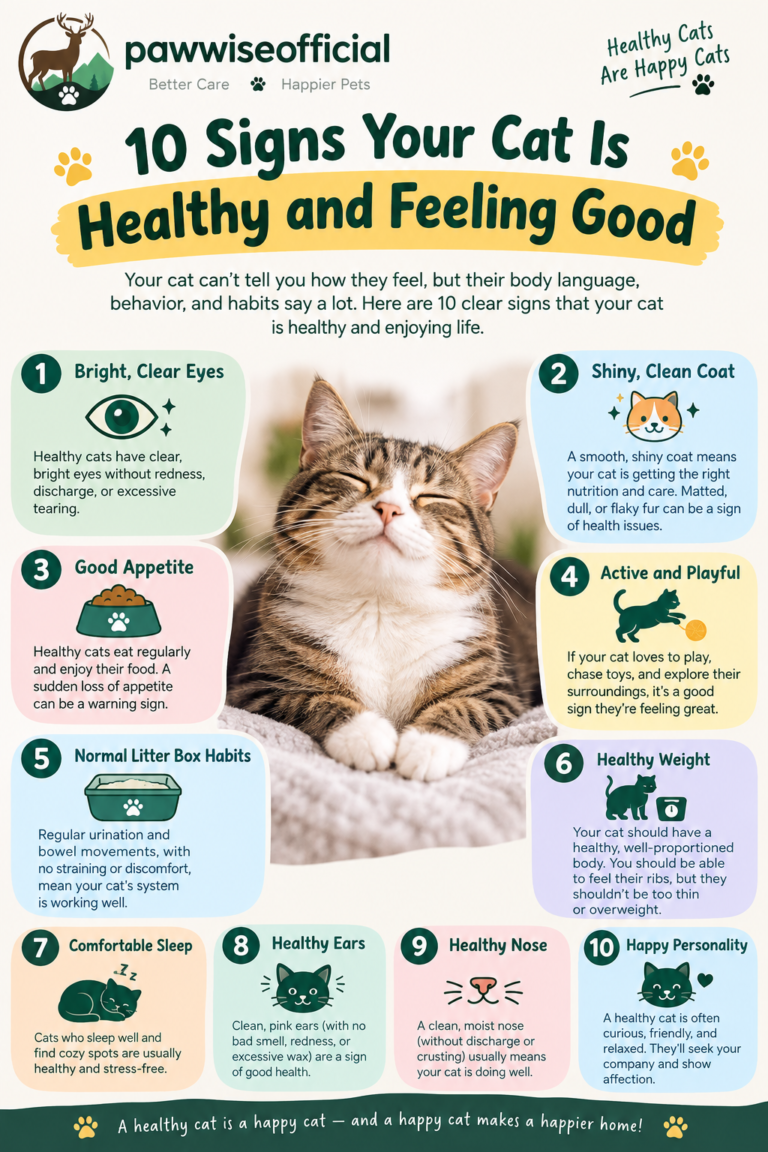
Here are 10 common signs that your cat is healthy and feeling good.

1. Your Cat Has a Healthy Appetite

One of the easiest ways to keep an eye on your cat’s health is to pay attention to their eating habits.

A healthy cat usually has a fairly consistent appetite. They may get excited when you open the food bag, come running when they hear their bowl being filled, or simply eat their meals without much fuss.

Some cats are enthusiastic eaters, while others prefer to nibble throughout the day. Both can be normal.

What matters is a noticeable change.

If your cat suddenly refuses food, eats much less than usual, or seems unusually hungry all the time, it’s worth paying attention. Changes in appetite can sometimes be linked to stress, dental problems, digestive issues, or other health concerns.

So, is your cat suddenly turning their nose up at a food they normally love?

Don’t ignore the change, especially if it continues.

A healthy diet also matters. Your cat should receive a complete and balanced cat food appropriate for their age, lifestyle, and nutritional needs.

2. Their Weight Stays Fairly Stable

A healthy cat should maintain a relatively stable body weight as they grow into adulthood.

That doesn’t mean your cat needs to look exactly like the cats you see online. Cats come in different shapes and sizes, and their ideal weight can vary depending on their breed, age, body structure, and activity level.

Still, sudden weight loss or unexplained weight gain deserves attention.

You should be able to gently feel your cat’s ribs without them being covered by a thick layer of fat, but the ribs shouldn’t be extremely prominent either. Your cat should also have a natural waist when viewed from above.

If you’re unsure whether your cat is at a healthy weight, ask your veterinarian during a routine checkup.

Keeping your cat at a healthy weight is important because obesity can increase the risk of several health problems.

And yes, those extra treats can add up quickly, even when your cat gives you those heartbreaking eyes!

3. Your Cat Has Bright, Clear Eyes

Take a close look at your cat’s eyes.

Healthy cat eyes are generally clear and bright, although the exact color can vary from cat to cat. You shouldn’t normally see excessive discharge, thick mucus, or significant redness.

Your cat should also be able to open both eyes comfortably.

A little crust around the eyes after sleeping may happen occasionally, but persistent discharge is different.

Watch for signs such as:

  • Red or swollen eyes
  • Excessive tearing
  • Thick discharge
  • Squinting
  • Cloudiness
  • Keeping one eye closed
  • Frequently rubbing the face

If you notice these symptoms, especially if they appear suddenly, contact your veterinarian.

Your cat’s eyes can sometimes give you an early clue that something isn’t quite right.

4. Their Coat Looks Clean and Well-Maintained

A healthy cat usually takes grooming seriously.

In fact, cats can spend a surprising amount of time cleaning themselves. That grooming helps keep their coat smooth, clean, and comfortable.

Depending on your cat’s breed and coat type, a healthy coat may feel soft and look shiny, fluffy, or sleek.

Regular grooming is also useful because it gives you an opportunity to notice changes.

Run your hands gently through your cat’s fur and look for things such as:

  • Bald patches
  • Excessive dandruff
  • Red or irritated skin
  • Scabs
  • Fleas or flea dirt
  • Unusual lumps
  • Excessive shedding

Some shedding is completely normal, especially during seasonal changes. But if your cat suddenly starts losing large amounts of fur, scratching constantly, or developing bald spots, something may be bothering them.

Regular brushing can help reduce loose fur, prevent mats, and keep your cat’s coat looking its best.

5. Your Cat Uses the Litter Box Normally

Okay, this might not be the most glamorous part of cat ownership, but your cat’s litter box habits can tell you a lot about their health.

A healthy cat generally has a consistent bathroom routine. You should become familiar with what is normal for your individual cat, including how often they urinate and what their stools usually look like.

Changes can sometimes be an early warning sign.

For example, pay attention if your cat:

  • Suddenly urinates much more or less often
  • Strains in the litter box
  • Has diarrhea repeatedly
  • Becomes constipated
  • Has blood in their urine or stool
  • Starts urinating outside the litter box
  • Cries or seems uncomfortable while using the litter box

Urinary problems can become serious quickly, particularly in male cats. If your cat is repeatedly trying to urinate but little or no urine is coming out, that can be an emergency and requires immediate veterinary attention.

Keeping the litter box clean also matters. Cats are naturally clean animals, and many dislike using a dirty box.

A clean litter box isn’t just better for your home, it also makes it much easier for you to notice changes in your cat’s bathroom habits.

6. They Have Normal Energy for Their Personality

Does your cat still get the occasional burst of energy?

Maybe they race through the hallway at midnight, chase a toy across the living room, or suddenly decide that your feet are the most exciting thing in the house.

Those little moments are usually good signs.

Healthy cats generally have an energy level that is appropriate for their age and personality. A young kitten may be extremely active, while an older cat may prefer short play sessions followed by a long nap.

And that brings us to an important point, cats sleep a lot.

So don’t panic just because your cat spends a large part of the day sleeping.

Instead, look for changes from their normal routine.

If a normally playful cat suddenly becomes extremely tired, stops interacting with the family, or seems weak and withdrawn, pay attention.

Sometimes the most important health clue isn’t what your cat is doing, but what they have stopped doing.

7. Your Cat Is Interested in Their Surroundings

A healthy, comfortable cat is usually curious about what is happening around them.

They might watch birds through the window, investigate a strange noise, sniff a new box, or follow you from room to room.

Some cats are naturally more curious than others, of course.

Your cat doesn’t need to act like an explorer every minute of the day. But they should generally show some interest in their environment.

Environmental enrichment can help support this natural curiosity. Scratching posts, climbing areas, puzzle feeders, interactive toys, and safe places to hide can make an indoor cat’s life much more interesting.

Even something as simple as putting a comfortable bed near a window can give your cat something entertaining to watch.

Sometimes, the best cat toy is still… a cardboard box.

8. Their Breathing Looks Comfortable

When your cat is resting peacefully, their breathing should generally look calm and comfortable.

You shouldn’t normally see your cat struggling to breathe, breathing with their mouth open, or making unusual noises with every breath.

Watch your cat when they are relaxed rather than immediately after intense play.

Signs that breathing may not be normal include:

  • Rapid or difficult breathing
  • Open-mouth breathing
  • Excessive effort when breathing
  • Persistent coughing
  • Wheezing
  • Blue or gray-looking gums or tongue

Breathing difficulties should not be brushed off as simply being tired.

If your cat appears to be struggling to breathe, seek veterinary help promptly.

9. They Show Normal Social Behavior

Not every cat is going to greet you at the door like an excited dog.

Some cats love cuddles. Others prefer sitting beside you without actually touching you. Some will follow you everywhere, while others seem to consider personal space a basic human right.

All of these personalities can be perfectly normal.

One of the strongest signs that your cat is feeling good is that they continue behaving like themselves.

A social cat may continue rubbing against your legs, purring, sitting beside you, or asking for attention.

A more independent cat may simply stay nearby, watch what you’re doing, or occasionally come over for a quick head scratch.

The key is consistency.

If your normally affectionate cat suddenly hides all day, avoids being touched, or becomes unusually aggressive, something may be wrong.

Behavioral changes deserve attention, particularly when they happen without an obvious reason.

10. Your Cat Seems Comfortable and Content

Perhaps the biggest sign of a healthy and happy cat is simple, everyday comfort.

You might find your cat sleeping peacefully with their paws tucked underneath them. Maybe they stretch out in a warm patch of sunlight, groom themselves, play with a favorite toy, or settle beside you while you work.

A relaxed cat often has a comfortable posture and can settle into normal sleep without constantly appearing restless or distressed.

You may also notice behaviors such as:

  • Gentle purring
  • Slow blinking
  • Stretching
  • Normal grooming
  • Playing
  • Relaxed body language
  • Choosing comfortable sleeping spots
  • Seeking affection when they want it

Remember, though, purring doesn’t always mean a cat is happy. Cats can also purr when they are stressed, frightened, or uncomfortable.

That’s why it’s better to look at the whole picture rather than relying on one behavior.

How Can You Tell if Your Cat Is Really Healthy?

The best way to understand your cat’s health is to know their normal routine.

How much do they usually eat?

How often do they use the litter box?

How active are they?

Do they enjoy being brushed?

Where do they usually sleep?

How do they normally behave around you?

These everyday details create a baseline. Once you know what is normal for your cat, unusual changes become much easier to spot.

Regular veterinary checkups are also an important part of responsible cat care. Even when your cat appears perfectly healthy, routine examinations can help identify potential problems before they become more serious.

When Should You Call the Vet?

Not every unusual behavior means your cat is sick. Cats can have an off day, become stressed after a change at home, or simply decide that today is a good day to ignore everyone.

Still, some changes shouldn’t be ignored.

Contact your veterinarian if you notice persistent or sudden changes such as:

  • Loss of appetite
  • Significant weight loss or gain
  • Repeated vomiting or diarrhea
  • Difficulty urinating
  • Blood in urine or stool
  • Severe lethargy
  • Breathing difficulties
  • Sudden behavioral changes
  • Persistent scratching or hair loss
  • Problems walking or jumping
  • Signs of pain

If your cat seems seriously unwell or is having trouble breathing, don’t wait to see if the problem disappears.

Frequently Asked Questions

How do I know if my cat is healthy?
A healthy cat typically has a consistent appetite, stable weight, clear eyes, a well-maintained coat, normal litter box habits, and an energy level that is normal for their age and personality.

How can I tell if my cat is happy?
Relaxed body language, normal grooming, playfulness, curiosity, comfortable sleeping, and normal social behavior can all be positive signs. However, every cat has a different personality.

How often should a healthy cat visit the vet?
Routine veterinary visits are important even when your cat appears healthy. Your veterinarian can recommend an appropriate schedule based on your cat’s age, lifestyle, and individual needs.

Is it normal for cats to sleep all day?
Cats naturally sleep for many hours each day. The important thing is to notice whether your cat’s sleeping habits have changed significantly from their usual routine.

What is the biggest sign that something is wrong with my cat?
A sudden change from your cat’s normal behavior is one of the most useful things to watch for. Changes in eating, drinking, litter box use, grooming, energy, or social behavior can all deserve attention.

How to Keep Your Dog Cool in Hot Weather

0

Summer can be fun, but for your dog, a really hot day can become uncomfortable, and sometimes dangerous, surprisingly quickly.

Maybe you’ve noticed your dog panting more than usual after a short walk. Or perhaps they’re spending more time lying on the cool floor instead of following you around the house.

You might even wonder, “Is my dog too hot?”

It’s a good question.

Dogs don’t cool themselves the same way humans do. They rely mainly on panting and a few other ways of releasing heat, which makes them more vulnerable to overheating during hot and humid weather.

The good news? There are plenty of simple things you can do to help your dog stay cool, comfortable, and safe.

From providing fresh water and shade to changing your walking routine, a few small adjustments can make a huge difference.

So, how can you keep your dog cool in hot weather?

Let’s get into it.

Why Do Dogs Get Hot So Easily?

Before talking about cooling tips, it helps to understand how dogs actually regulate their body temperature.

Humans can sweat over most of their bodies, and that sweat helps us cool down as it evaporates.

Dogs are different.

They rely primarily on panting to release heat. They also have sweat glands in their paw pads, but sweating through the paws plays only a small role in cooling.

This means dogs can struggle when temperatures rise, especially if they’re exercising, spending time in direct sunlight, or staying somewhere hot and poorly ventilated.

Humidity can make things even harder because panting works through evaporation, and high humidity reduces how effectively that process cools the body.

That’s why a hot, humid afternoon isn’t the best time for a long game of fetch.

Your dog may be having fun, but their body could be working much harder than you realize.

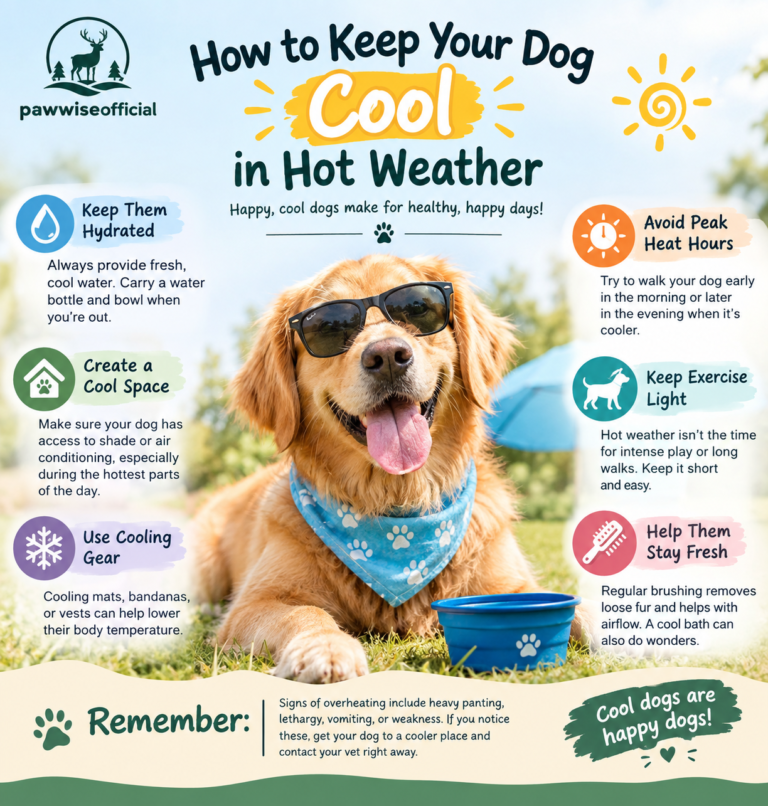
1. Always Provide Plenty of Fresh Water

This sounds obvious, but it’s one of the most important ways to help your dog stay cool.

Make sure your dog has access to clean, fresh water throughout the day.

On especially hot days, check the bowl regularly. Outdoor water can become warm, dirty, or run out faster than you expect.

If your dog spends time in different areas of the house or yard, consider placing water bowls in more than one convenient location.

Going for a walk?

Take water with you.

Going on a hike?

Bring enough for both you and your dog.

And don’t wait until your dog looks exhausted before offering water.

Keeping them hydrated is part of preventing overheating in the first place.

2. Create a Cool, Shady Place

If your dog spends time outside, make sure they have access to a cool, shaded area.

A small patch of shade might not be enough if the sun moves during the day.

Think about where the shade will be at different times, especially during the hottest part of the afternoon.

An outdoor shelter should also have good airflow.

A closed dog house sitting in direct sunlight can become surprisingly hot inside.

Whenever possible, let your dog come indoors to a cooler environment during periods of extreme heat.

Honestly, if you’re sitting inside thinking, “It’s way too hot out there,” your dog may agree with you.

3. Walk Your Dog During Cooler Hours

One of the easiest ways to keep your dog cool is to change when you exercise them.

Instead of taking a long walk in the middle of the afternoon, try going early in the morning or later in the evening when temperatures are lower.

This is especially important if your dog is energetic and loves long walks.

A shorter morning walk can be much safer than an intense midday workout.

And don’t forget about humidity. A day that doesn’t seem extremely hot can still be difficult for dogs if the air is very humid.

So, check the conditions, not just the temperature.

4. Check the Pavement Before Walking

Here’s something many dog owners don’t think about until it’s too late.

The ground can be much hotter than the air.

Black asphalt and other dark surfaces can heat up significantly under direct sunlight, potentially burning your dog’s paw pads.

Before going for a walk, place the back of your hand against the pavement for several seconds.

If it’s uncomfortable for your hand, it’s probably not a good surface for your dog’s paws.

Better yet, choose grassy or shaded routes whenever possible.

And if the pavement is simply too hot, skip the walk and find another way to keep your dog mentally and physically active indoors.

A missed walk is better than burned paws,, every time.

5. Never Leave Your Dog in a Parked Car

This one deserves its own section because it’s so important.

Never leave your dog alone in a parked car, even if the windows are cracked open.

Cars can heat up extremely quickly, creating dangerous conditions for a dog inside. Heatstroke can develop rapidly, and it can become life-threatening.

It doesn’t matter if you’re “only going inside for five minutes.”

Don’t take the chance.

If your dog can’t safely come with you, leave them at home in a cool environment instead.

6. Give Your Dog Access to a Cool Indoor Space

During very hot weather, the safest place for many dogs is inside a cool, well-ventilated home.

If you use air conditioning, keep the room comfortable rather than letting your dog become overheated.

If you don’t have air conditioning, choose the coolest room in your home and improve airflow with fans where appropriate.

Close curtains or blinds on windows receiving strong direct sunlight.

You can also encourage your dog to rest on a cool floor rather than a thick, warm bed.

Sometimes your dog will figure this out on their own.

You’ll see them stretch out on the tile floor, looking completely pleased with their decision.

And honestly, they may have the right idea.

7. Try a Cooling Mat or Cooling Bed

Cooling mats and beds can give dogs a comfortable place to lie down when the weather is warm.

They’re not magic solutions, though.

A cooling mat should be considered an extra comfort tool, not a replacement for shade, water, ventilation, or a genuinely cool environment.

Some dogs love them immediately.

Others will look at a brand-new cooling mat, sniff it once, and then choose the floor beside it.

That’s dogs for you.

If your dog doesn’t like the mat, don’t force them to use it. Give them other ways to find a comfortable resting spot.

8. Don’t Shave Your Dog Just Because It’s Hot

This is a common summer question:

“Should I shave my dog to keep them cool?”

Not necessarily.

For many dogs, particularly double-coated breeds, the coat helps provide insulation against both heat and cold. Shaving can remove that protective layer and may create other coat problems.

Instead of shaving, focus on regular grooming.

Brushing can help remove loose undercoat and keep the coat free from mats and tangles.

If you’re unsure about your dog’s grooming needs, talk to a professional groomer or veterinarian who understands your dog’s particular coat type.

9. Keep Exercise Shorter During Extreme Heat

Your dog may normally love running, hiking, or playing fetch for an hour.

That doesn’t mean they should do the same thing when temperatures are extremely high.

On very hot days, reduce the intensity and duration of exercise.

Try shorter walks, gentle indoor games, training exercises, or scent-based activities instead.

Remember, mental stimulation counts too.

A 10-minute training session can give your dog’s brain plenty to think about without requiring them to run around under the hot sun.

10. Use Water for Safe Cooling

Some dogs absolutely love water.

If yours does, a shallow paddling pool can be a fun way to cool off, provided it’s safe and supervised.

You can also let your dog play with a sprinkler or spend time swimming in a safe, dog-appropriate area.

But don’t assume every dog knows how to swim.

Some dogs are natural swimmers, while others can struggle in the water, particularly dogs with short legs, heavy bodies, or flat faces.

Always supervise your dog around water.

And remember, swimming isn’t automatically safe just because your dog seems excited to jump in.

11. Offer Frozen Dog-Friendly Treats

Want to make a hot afternoon a little more enjoyable?

Frozen treats can be a fun option.

You can freeze small portions of your dog’s regular food, use dog-safe ingredients, or freeze treats inside a food puzzle.

The goal isn’t to give your dog a huge amount of extra food.

Instead, think of it as a small enrichment activity that also makes snack time more refreshing.

If you’re unsure whether an ingredient is safe for your dog, don’t use it.

Simple is usually better.

12. Brush Your Dog Regularly

Regular grooming can be especially helpful during heavy shedding periods.

Brushing removes loose hair and helps keep the coat in good condition.

For dogs with thick or double coats, grooming can be particularly important.

But avoid the temptation to aggressively remove every bit of undercoat or shave the dog without professional guidance.

Your dog’s coat has a purpose.

Think of grooming as maintaining the coat, not trying to remove it completely.

Which Dogs Are More at Risk in Hot Weather?

Every dog can overheat, but some dogs need extra care.

Dogs at higher risk can include:

  • Puppies
  • Senior dogs
  • Overweight dogs
  • Dogs with heart or breathing problems
  • Dogs with certain medical conditions
  • Flat-faced or short-nosed breeds
  • Dogs with thick or heavy coats
  • Dogs that have experienced heatstroke before

Short-nosed breeds, such as Bulldogs, Pugs, and French Bulldogs, can have particular difficulty cooling themselves efficiently.

That doesn’t mean these dogs can’t enjoy summer.

It simply means their owners need to be more careful about heat exposure, exercise, hydration, and warning signs.

How Do You Know If Your Dog Is Too Hot?

This is one of the most important things every dog owner should know.

Some panting is normal, especially after exercise.

But excessive or frantic panting can be a warning sign.

Other signs of overheating can include:

  • Excessive drooling
  • Thick or sticky saliva
  • Bright red gums or tongue
  • Weakness
  • Rapid breathing
  • Difficulty walking
  • Vomiting
  • Diarrhea
  • Confusion
  • Loss of coordination
  • Collapse
  • Seizures

As overheating becomes more severe, the symptoms can become life-threatening.

So, don’t wait for your dog to collapse before taking action.

If something seems wrong, move them to a cooler environment and seek veterinary advice.

What Should You Do If Your Dog Is Overheating?

If you think your dog may be suffering from heatstroke, treat it as an emergency.

Move your dog to a cool, well-ventilated or air-conditioned area and contact a veterinarian immediately. While arranging veterinary care, controlled cooling with cool, not ice-cold, water can help. A fan or air conditioning can also support evaporative cooling.

If your dog is alert and able to drink, you can offer room-temperature water.

Don’t force them to drink.

And don’t delay veterinary care simply because your dog seems to improve.

Heatstroke can cause internal organ damage that isn’t immediately obvious, so veterinary evaluation is important after suspected heatstroke.

Should You Use Ice to Cool Your Dog?

This is a question that comes up often.

Avoid using ice or extremely cold water as your first response.

Veterinary guidance generally favors controlled cooling with cool or tepid water rather than extreme cold.

If you’re dealing with suspected heatstroke, the safest approach is to start cooling your dog while getting veterinary help, rather than experimenting with extreme-temperature treatments at home.

Can a Fan Keep a Dog Cool?

A fan can help circulate air and support cooling, especially when combined with a genuinely cool environment.

But don’t rely on a fan alone during extreme heat.

Your dog still needs access to water, shade or a cool indoor area, and reduced activity.

If the room itself is extremely hot, blowing hot air around won’t solve the problem.

What About Hot Weather at Night?

Don’t assume your dog is automatically safe once the sun goes down.

Some summer nights remain hot and humid, and indoor temperatures can stay elevated for hours after sunset.

Make sure your dog has a comfortable sleeping area with good airflow and access to fresh water.

If your home remains very warm overnight, consider moving your dog’s bed to the coolest safe area of the house.

How Can You Keep Your Dog Cool Without Air Conditioning?

Not everyone has access to air conditioning, and that’s okay.

You can still take several steps to reduce heat exposure.

Try to:

  • Keep your dog in the coolest room available
  • Close curtains against direct sunlight
  • Use fans to improve airflow
  • Provide plenty of fresh water
  • Use a cooling mat if your dog likes one
  • Offer supervised water play
  • Avoid outdoor exercise during peak heat
  • Keep your dog’s coat groomed appropriately
  • Watch closely for signs of overheating

If your home becomes dangerously hot, consider taking your dog to a safer, cooler location.

Your dog’s comfort isn’t something to gamble with during an extreme heat event.

A Simple Hot-Weather Routine for Your Dog

Want to make summer easier?

Try building a simple routine around the hottest part of the day.

Early morning:
Take your dog’s main walk while temperatures are cooler.

Late morning:
Keep activity light and make sure fresh water is available.

Afternoon:
Stay indoors or in a cool shaded area. Offer a puzzle toy, training game, or frozen treat.

Evening:
If conditions are comfortable, take another shorter walk or enjoy some gentle outdoor play.

Before bed:
Check that your dog has fresh water and a comfortable, well-ventilated sleeping area.

Of course, every dog is different.

A senior dog, puppy, or flat-faced breed may need an even more cautious routine.

Don’t Forget About Humidity

Temperature isn’t the only thing that matters.

Humidity can make hot weather more dangerous because it reduces the effectiveness of panting and evaporation.

That’s why a humid day can feel much worse for your dog than the thermometer alone suggests.

If the air feels heavy and sticky, take that seriously.

Shorten outdoor activities, stay in a cool environment, and watch your dog closely.

Why Is My Dog Losing Hair? Common Causes

0

Finding a little dog hair on your sofa is completely normal.

Finding it everywhere, though, is a different story.

If your dog suddenly seems to be shedding much more than usual, or you’ve noticed bald spots, thinning fur, flaky skin, or patches of missing hair, you’re probably wondering, “Why is my dog losing hair?”

And honestly, it can be worrying.

Dog hair loss, also called alopecia, can happen for many different reasons. Sometimes, it’s nothing more than normal seasonal shedding. Other times, excessive shedding can be a sign of allergies, parasites, skin irritation, hormonal problems, nutritional issues, or another underlying health condition.

So how do you know what’s normal and what deserves a closer look?

Let’s break down the most common causes of hair loss in dogs, the signs to watch for, and when it’s time to call your veterinarian.

Is It Normal for Dogs to Lose Hair?

Yes, some hair loss is completely normal.

Dogs naturally shed old or damaged hair to make room for new growth. Some breeds shed a little, while others seem to leave a furry reminder of themselves on every piece of furniture in the house.

Seasonal shedding can also make a big difference. Depending on the breed and environment, some dogs shed more heavily during certain times of the year.

But there’s an important difference between normal shedding and abnormal hair loss.

Normal shedding usually doesn’t cause obvious bald patches or irritated skin.

If your dog’s coat is becoming noticeably thinner, hair is falling out in clumps, or you can see bald areas, something else may be going on.

And if your dog is scratching, licking, biting, or rubbing their skin constantly,, that’s another clue worth paying attention to.

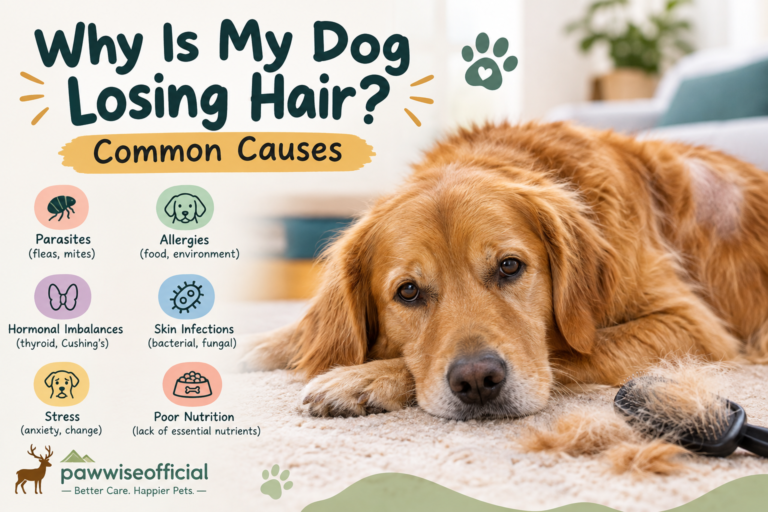
1. Fleas and Other Parasites

One of the first things to consider when your dog is losing hair is parasites.

Fleas are especially common and can cause intense itching. Some dogs are allergic to flea saliva, which means even a small number of fleas can cause a surprisingly strong reaction.

Your dog may scratch, lick, or chew certain areas repeatedly, eventually damaging the skin and pulling out hair.

You might notice hair loss around the:

  • Base of the tail
  • Lower back
  • Hind legs
  • Belly
  • Inner thighs

And here’s the frustrating part, you may not always see fleas.

A dog can have a flea problem even when you don’t spot an actual flea crawling through the fur.

Other parasites, including certain types of mites, can also cause hair loss and irritated skin.

If you suspect parasites, your veterinarian can check your dog’s skin and recommend an appropriate treatment.

2. Allergies

Just like people, dogs can develop allergies.

Allergies are a common reason for itchy skin and hair loss in dogs.

Your dog’s allergy might be related to something in their environment, such as pollen, dust, mold, or certain plants. Food allergies or sensitivities can also contribute to skin problems in some dogs.

Instead of simply losing hair, many allergic dogs become extremely itchy.

They may:

  • Scratch frequently
  • Lick their paws
  • Chew their legs
  • Rub their face
  • Shake their ears
  • Develop red or irritated skin

Over time, all that scratching and licking can damage the coat and cause noticeable hair loss.

If your dog seems constantly itchy, don’t just assume they’re going through a normal shedding season.

There may be an underlying cause that needs attention.

3. Skin Infections

Bacterial and fungal infections can affect your dog’s skin and coat.

A common example is ringworm, which is a fungal infection rather than an actual worm.

Ringworm can cause circular areas of hair loss, redness, scaling, or crusting. It can also spread to other animals and, in some cases, people.

Other skin infections can cause symptoms such as:

  • Redness
  • Odor
  • Scabs
  • Flaky skin
  • Moist or irritated areas
  • Excessive itching
  • Hair loss

If your dog’s skin looks unusual, especially if the hair loss is spreading, it’s a good idea to have them examined rather than trying random treatments at home.

4. Your Dog May Be Dealing With Mites

Mites are tiny parasites that can cause significant skin problems.

One condition people often hear about is sarcoptic mange, which can cause intense itching, redness, crusting, and hair loss.

Another type, demodectic mange, is associated with an overgrowth of Demodex mites. It can cause localized or widespread hair loss and skin changes.

Mange isn’t something you can reliably diagnose just by looking at your dog’s coat.

A veterinarian may need to examine skin samples under a microscope or perform other tests.

The good news is that many mite-related conditions can be treated, but the treatment depends on what’s actually causing the problem.

5. Hormonal or Other Medical Problems

Sometimes, hair loss isn’t primarily a skin problem.

Certain medical conditions can affect the way a dog’s hair grows.

For example, hormonal disorders such as hypothyroidism or Cushing’s disease may be associated with changes in the skin and coat.

A dog with a hormonal condition might also show other changes, such as:

  • Weight changes
  • Increased thirst
  • Increased urination
  • Low energy
  • Changes in appetite
  • A thinner coat
  • Slow hair regrowth

Hair loss caused by an underlying medical condition can look quite different from ordinary shedding.

If your dog’s coat has changed noticeably and you can’t find an obvious explanation, a veterinary checkup is worthwhile.

Sometimes the fur is simply the first thing that makes an owner realize something else has changed.

6. Poor Nutrition Can Affect the Coat

Your dog’s coat can tell you quite a bit about their overall health.

A balanced, complete diet provides the nutrients dogs need to support healthy skin and hair.

If a dog’s nutritional needs aren’t being met, their coat may become dry, dull, brittle, or thin.

Protein, essential fatty acids, vitamins, and minerals all play roles in maintaining healthy skin and fur.

That doesn’t mean every dog with hair loss needs supplements.

In fact, adding random supplements without knowing what your dog actually needs isn’t always a good idea.

If you’re concerned about your dog’s diet, talk with your veterinarian before making major changes or adding supplements.

A healthy coat starts from the inside,, but the solution isn’t always sitting in a bottle of vitamins.

7. Stress and Anxiety

Believe it or not, stress can sometimes affect a dog’s skin and coat.

Dogs can experience stress for many reasons, including major changes in their environment, separation, unfamiliar situations, loud noises, or changes in their routine.

Some stressed dogs repeatedly lick or chew certain parts of their body. This behavior can eventually cause hair loss and skin irritation.

You may notice your dog licking their paws or legs over and over again, especially when they’re anxious or bored.

However, don’t automatically assume that licking means your dog is stressed.

Pain, allergies, parasites, and skin infections can cause similar behavior.

It’s important to rule out physical causes first.

8. Excessive Licking or Scratching

Sometimes, the hair loss itself isn’t the original problem.

Your dog may start scratching or licking because something is irritating their skin, and the repeated behavior causes the hair to disappear.

Think about it this way, the missing fur is often a symptom, not the actual disease.

Your dog could be reacting to:

  • Fleas
  • Allergies
  • Dry skin
  • Pain
  • Infections
  • Parasites
  • Environmental irritants

If you keep treating the hair loss without figuring out why your dog is scratching or licking, the problem may simply keep coming back.

That’s why identifying the underlying cause matters.

9. Seasonal Shedding

Now for the reassuring possibility, maybe your dog is simply shedding.

Many dogs experience periods of heavier shedding as their coats adjust to seasonal changes.

During these times, you might notice:

More hair on your furniture.

More hair on your clothes.

More hair in the vacuum cleaner.

And somehow, even more hair on your clothes five minutes after vacuuming.

That’s normal for many dogs.

Regular brushing can help remove loose fur before it ends up all over your home. The type of brush you use should depend on your dog’s coat.

A short-haired dog, a double-coated dog, and a long-haired dog don’t necessarily need the same grooming routine.

10. Genetics and Breed Can Play a Role

Some dogs are naturally more prone to certain coat and skin conditions.

Breed genetics can influence the thickness of the coat, shedding patterns, allergies, and susceptibility to particular skin disorders.

Some dogs may also develop age-related thinning or coat changes.

So if your dog has always had a certain coat pattern, it may simply be part of their genetics.

But a new or sudden change deserves more attention.

If your dog’s coat has recently become much thinner than usual, don’t assume it’s simply their breed.

What Does Abnormal Hair Loss Look Like?

Not every loose hair means something is wrong.

But certain changes are worth noticing.

Contact your veterinarian if you see:

  • Bald patches
  • Sudden or severe shedding
  • Red or inflamed skin
  • Scabs or sores
  • Persistent itching
  • Constant licking or chewing
  • A strong skin odor
  • Circular areas of hair loss
  • Changes in skin color
  • Hair loss that keeps spreading
  • Hair that isn’t growing back

Also pay attention to your dog’s overall behavior.

Are they eating normally?

Are they sleeping normally?

Do they seem comfortable?

Have you noticed changes in their weight or energy?

Those details can help your veterinarian understand the bigger picture.

Why Is My Dog Losing Hair Around Their Eyes or Ears?

Hair loss around the face can have several possible causes.

Parasites, allergies, infections, irritation, and excessive scratching can all affect these areas.

Dogs may also rub their faces against carpets, furniture, or their paws when something is bothering them.

Because the eyes and ears are sensitive areas, avoid putting human creams, oils, or medications on them unless your veterinarian specifically recommends it.

A seemingly harmless home remedy can sometimes make irritation worse.

Why Is My Dog Losing Hair on Their Back?

Hair loss on the back, particularly around the tail area, can sometimes be associated with fleas or flea allergy dermatitis.

But there are other possibilities too, including allergies, skin infections, hormonal problems, and excessive scratching.

The location of the hair loss can give your veterinarian useful clues, but it usually isn’t enough to identify the cause by itself.

That’s why an examination matters if the problem continues.

Can Changing Dog Shampoo Cause Hair Loss?

It can contribute to skin irritation in some dogs.

Dogs have different skin needs from humans, and products made for people may be too harsh for them.

If you recently changed grooming products and your dog’s skin became irritated afterward, stop using the new product and discuss the situation with your veterinarian if symptoms continue.

For regular bathing, choose products specifically formulated for dogs.

And remember, more baths aren’t necessarily better.

Over-bathing can sometimes dry or irritate the skin.

Should You Be Worried About Your Dog’s Hair Loss?

Not necessarily.

A little extra shedding can be completely normal.

But if the hair loss is sudden, severe, patchy, or accompanied by itching, redness, sores, odor, or other changes, it’s worth getting professional advice.

The earlier you identify the cause, the easier it may be to manage the problem.

And please don’t feel bad if you can’t figure it out yourself.

There are a lot of possible causes of dog hair loss, and several conditions can look surprisingly similar.

That’s what veterinary examinations and diagnostic tests are for.

How Can You Help Keep Your Dog’s Coat Healthy?

You don’t need a complicated beauty routine to support a healthy coat.

Start with the basics:

Feed a Balanced Diet

Choose a complete and balanced dog food appropriate for your dog’s life stage and nutritional needs.

Brush Regularly

Brushing removes loose hair, helps prevent some tangles, and gives you a chance to notice changes in your dog’s skin.

Keep Parasite Prevention Up to Date

Use parasite prevention recommended by your veterinarian, especially if your dog spends time outdoors or around other animals.

Don’t Ignore Itching

Occasional scratching is normal.

Constant scratching isn’t.

Check the Skin During Grooming

Look for redness, lumps, scabs, flakes, unusual smells, or areas where the hair is becoming thinner.

A few minutes of checking can help you notice changes early.

When Should You Take Your Dog to the Vet?

If your dog is losing hair and you aren’t sure why, a veterinarian is the safest person to ask.

Definitely seek professional advice if the hair loss is accompanied by severe itching, open wounds, infection, pain, lethargy, appetite changes, weight changes, or rapid spreading of bald patches.

Your veterinarian may examine the skin and coat, look for parasites, and recommend additional testing if needed.

Treatment depends entirely on the cause.

Flea-related hair loss, allergies, infections, mites, hormonal conditions, and nutritional problems don’t all have the same solution.

So, try not to diagnose your dog based on a Google search alone,, even if you’ve already spent an hour looking at pictures of “dog bald spots” at two in the morning.

We’ve all been there.


How Much Exercise Does Your Dog Need Every Day?

0

Have you ever come home after a long day, only to find your dog staring at you with that look that clearly says, “So… are we going outside or what?”

If you have, you’re definitely not alone.

One of the most common questions dog owners ask is, how much exercise does a dog actually need every day? And honestly, there isn’t one simple answer.

Some dogs are perfectly happy with a couple of relaxed walks and some playtime. Others seem to have an endless supply of energy and could probably run around the yard all afternoon without getting tired.

Your dog’s age, breed, size, health, fitness level, and personality all matter.

A young Border Collie, for example, is going to have very different exercise needs from an older Shih Tzu. And even two dogs of the same breed can be completely different.

The good news is, once you understand your dog’s needs, creating a healthy exercise routine becomes much easier.

So, let’s talk about how much exercise your dog really needs, what counts as exercise, the signs they’re getting too little or too much, and a few easy ways to keep them active without turning every day into a marathon.

How Much Exercise Does a Dog Need Every Day?

As a general starting point, many healthy adult dogs benefit from around 30 minutes to 2 hours of physical activity each day.

But don’t treat that range like a strict rule carved in stone.

Some dogs need less, while energetic working and sporting breeds may need considerably more. Puppies, senior dogs, and dogs with certain health conditions may also need a different approach.

The best exercise routine is one that fits your individual dog.

For some dogs, exercise might include a morning walk, a game of fetch in the evening, and a little training during the day.

For another dog, it could mean several short walks, gentle indoor play, and plenty of sniffing and exploring.

And yes, sniffing counts as something useful too.

Dogs experience the world through their noses. A walk where your dog stops every few seconds to investigate a smell might feel slow to you, but for them, it’s like scrolling through an endless feed of interesting information.

Why Is Daily Exercise So Important for Dogs?

Exercise isn’t just about helping your dog burn calories.

It’s a big part of keeping them physically and mentally healthy.

Regular movement can help support healthy muscles, joints, cardiovascular fitness, and weight management. It can also give dogs an outlet for all that natural energy they have.

And then there’s the mental side.

A dog who spends the entire day sitting around with nothing to do may eventually create their own entertainment.

Unfortunately, their idea of entertainment might be chewing your shoes, digging through the trash, barking at absolutely nothing, or rearranging the cushions on your sofa.

Not exactly the home makeover you had in mind,, right?

Regular exercise and mental stimulation can help reduce boredom and give your dog something positive to focus on.

Exercise Needs by Age

Your dog’s age is one of the first things you should consider when deciding how much exercise they need.

Puppies Need Short, Gentle Activities

Puppies are adorable little balls of energy, but that doesn’t mean they should be exercising for hours.

Their bodies are still developing, and their bones and joints need time to grow.

Instead of long, intense workouts, puppies usually do better with short walks, gentle play, basic training, and supervised exploration.

You might play with a toy for a few minutes, practice simple commands, let your puppy explore a safe area, and then give them time to rest.

And don’t underestimate how much sleep puppies need.

A puppy that suddenly becomes extra bitey, cranky, or completely wild may not need another game of fetch. They may simply be tired.

Sometimes the answer is a nap,, not more exercise.

Adult Dogs Usually Need Consistent Activity

Adult dogs are generally ready for a more regular exercise routine.

Depending on their breed and energy level, this might mean anywhere from 30 minutes to a couple of hours of activity throughout the day.

You don’t have to do it all at once.

In fact, splitting exercise into two or three sessions can work really well.

For example:

  • A morning walk
  • A short training session during the afternoon
  • Evening playtime or another walk

This gives your dog several opportunities to move and interact with you.

Senior Dogs Still Need Exercise

Getting older doesn’t mean your dog should stop moving.

In fact, gentle, appropriate exercise can be very helpful for many senior dogs.

However, you may need to slow things down.

Your older dog might prefer a relaxed walk around the neighborhood instead of a long hike. Gentle swimming or short play sessions may also be easier on aging joints.

Pay attention to how your dog feels during and after exercise.

If they’re limping, struggling to stand, becoming unusually tired, or showing signs of pain, don’t push them.

A veterinarian can help you figure out what type and amount of activity is appropriate.

How Breed Affects Your Dog’s Exercise Needs

Breed can give you a useful clue about your dog’s energy level.

High-Energy Dogs

Some breeds were literally developed to work, run, herd, retrieve, or stay active for long periods.

Border Collies, Australian Shepherds, Belgian Malinois, Siberian Huskies, and many sporting breeds can have very high exercise needs.

A quick walk around the block may not be enough for these dogs.

They often need a combination of physical exercise and mental stimulation.

Try activities such as:

  • Fetch
  • Hiking
  • Running
  • Agility
  • Scent games
  • Obedience training
  • Swimming
  • Interactive toys
  • Long sniffing walks

For these dogs, keeping their brain busy can be just as important as making their legs move.

Medium-Energy Dogs

Many popular family dogs fall somewhere in the middle.

They may enjoy a couple of good walks each day, along with games and training.

You don’t necessarily need to entertain them every second. What matters is giving them enough opportunities to move, explore, and interact.

Lower-Energy Dogs

Some dogs are naturally more relaxed.

They may be perfectly happy with shorter walks, gentle games, and plenty of rest.

But low-energy doesn’t mean no-energy.

Even a small or laid-back dog benefits from regular movement.

And remember, small dogs aren’t automatically low-energy. Some tiny dogs can run circles around much larger breeds,, literally.

How Do You Know If Your Dog Isn’t Getting Enough Exercise?

Your dog can’t exactly sit you down for a meeting and say, “We need to discuss my daily activity levels.”

Instead, they’ll usually show you through their behavior.

Here are some signs your dog may need more physical or mental stimulation.

1. They’re Constantly Restless

Does your dog pace around the house, repeatedly bring you toys, or follow you everywhere looking for something to do?

They may have extra energy that isn’t being used.

2. They’re Becoming Destructive

Chewing furniture, digging through things, stealing socks, or destroying toys can sometimes be linked to boredom.

Of course, destructive behavior can have many causes, including anxiety and separation-related problems, so exercise isn’t always the complete solution.

Still, a bored dog is often a creative dog,, and their creativity isn’t always convenient for you.

3. They’re Barking for Attention

Some dogs bark because they’re anxious, excited, alerting you to something, or trying to communicate.

But if your dog constantly demands attention and seems unable to settle, adding more appropriate activity and enrichment may help.

4. They’re Gaining Weight

Exercise is only one piece of the weight-management puzzle. Diet, age, metabolism, and health all matter too.

But if your dog is gaining unnecessary weight, it’s worth looking at both their food intake and daily activity.

5. They Seem Bored

Sometimes the signs are simple.

Your dog keeps wandering around, sighing dramatically, staring at you, and bringing you the same toy for the hundredth time.

Yep,, they might be bored.

Can a Dog Get Too Much Exercise?

Absolutely.

It’s easy to think that if some exercise is good, more must be better.

That’s not always true.

Overdoing exercise can leave your dog exhausted and may increase the risk of soreness or injury, particularly in puppies, senior dogs, overweight dogs, and dogs with existing health problems.

Watch for signs such as:

  • Excessive or unusual panting
  • Limping
  • Stiffness
  • Reluctance to keep walking
  • Sore or damaged paw pads
  • Extreme tiredness
  • Trouble getting up
  • Changes in normal behavior

If your dog seems uncomfortable, stop the activity and let them rest.

And be especially careful during hot weather.

Dogs can overheat quickly, and some breeds are more vulnerable than others. Avoid intense exercise during the hottest part of the day, provide fresh water, and choose cooler times for walks.

Don’t Forget Mental Exercise

Here’s something every dog owner should remember:

Exercise isn’t only about running.

Your dog’s brain needs a workout too.

Mental stimulation can be incredibly valuable, especially for intelligent or high-energy dogs.

You can give your dog a mental workout with simple activities like:

Puzzle Toys

Food puzzles make your dog think about how to reach the reward.

Training

Teaching your dog a new trick can be surprisingly tiring.

Try commands such as “place,” “touch,” “leave it,” or even fun tricks like spinning or putting a toy away.

Scent Games

Hide a few treats around a safe room and let your dog search for them.

For a dog, following a scent is serious business.

Sniff Walks

Instead of rushing through the walk, allow your dog time to stop and smell things.

It may take longer,, but your dog gets more mental enrichment from the experience.

Does Playing at Home Count as Exercise?

Yes.

You don’t always need a huge backyard or a hiking trail to give your dog some activity.

Indoor games can be especially useful on rainy days or when the weather outside is too hot.

Try:

  • Tug-of-war
  • Fetch down a hallway
  • Hide-and-seek
  • Training games
  • Treat searches
  • Puzzle toys
  • Interactive play

Just make sure the environment is safe and there isn’t anything slippery or dangerous that could cause an injury.

Does Having a Backyard Mean Your Dog Gets Enough Exercise?

Not necessarily.

This is something many dog owners assume.

They think, “My dog has a backyard, so they can exercise whenever they want.”

But dogs don’t always exercise themselves.

Your dog may go outside, sniff around for five minutes, lie down, and wait for you to come back.

A backyard is a great resource, but active play and interaction can make it much more useful.

Throw a ball, play a gentle game, practice recall, or create a simple scent game.

Sometimes your dog doesn’t need more space,, they need a reason to move.

What If Your Dog Doesn’t Like Walks?

Not every dog loves going for walks.

Some dogs are nervous around traffic, unfamiliar people, loud noises, or other animals.

If your dog refuses to walk, don’t automatically assume they’re being stubborn.

Try making the experience easier.

Choose quieter areas, keep the first walks short, use positive reinforcement, and allow your dog to explore at their own pace.

You can also provide exercise at home through games and training.

However, if your dog suddenly stops wanting to walk when they previously enjoyed it, pay attention.

A sudden change could be related to pain, injury, illness, or another problem, and it’s worth discussing with your veterinarian.

How to Create a Simple Daily Exercise Routine

If your dog isn’t currently getting much exercise, start slowly.

Don’t suddenly take a dog that normally walks for 10 minutes and expect them to complete a two-hour hike.

Gradually increase activity as their fitness improves.

A simple routine for a healthy adult dog might look something like this:

Morning:
A 20–30 minute walk with plenty of sniffing.

Afternoon:
10–15 minutes of training, indoor play, or a puzzle toy.

Evening:
Another walk or an active game, depending on your dog’s energy level.

Throughout the day:
Short opportunities for training, exploring, chewing, and mental stimulation.

Of course, this is only an example.

Your dog’s routine should be adjusted according to their age, breed, health, fitness, and personality.

What About Exercise in Hot Weather?

If you live somewhere with hot summers, this deserves extra attention.

A walk that feels comfortable to you may be too much for your dog.

Try exercising during the cooler parts of the day, usually early morning or later in the evening.

Always provide access to fresh water, and be careful with hot pavement, which can burn your dog’s paw pads.

Watch for warning signs of overheating, including heavy panting, weakness, drooling, confusion, vomiting, or collapse.

If you suspect your dog is overheating, treat it as an emergency and contact a veterinarian immediately.

When Should You Talk to Your Veterinarian?

If you’re unsure about your dog’s exercise needs, especially if they have a medical condition or are significantly overweight, your veterinarian can help.

It’s particularly important to ask for professional guidance if your dog:

  • Has difficulty breathing during normal activity
  • Develops a limp
  • Seems painful
  • Tires much faster than usual
  • Suddenly stops wanting to exercise
  • Has trouble walking or climbing stairs
  • Is recovering from an injury or surgery
  • Is elderly or has mobility problems

Don’t try to “exercise through” pain.

Your dog’s body language is telling you something, and it’s better to listen.


Why Do Dogs Eat Grass? 7 Possible Reasons

0

Have you ever taken your dog outside, only to watch them stop halfway through the yard and start munching on grass?

You look at them and think, “Why is my dog eating grass?”

Then maybe another question pops into your head, “Is my dog sick?” Or, “Do dogs eat grass when they have an upset stomach?” And if your dog suddenly starts eating grass more often than usual, it’s pretty easy to start worrying.

The good news is, dogs eating grass is a fairly common behavior. Some dogs take a few bites during a walk and move on, while others seem to search for the perfect patch of fresh green grass every time they go outside.

But why do they do it?

Is your dog trying to make themselves vomit? Could they be hungry? Are they bored? Maybe they like the taste, or maybe something else is going on.

Honestly,, there isn’t one simple answer.

Dogs eat grass for several possible reasons, and most of the time, occasional grass eating isn’t something that should immediately send you into panic mode. Still, it’s important to pay attention to how much grass your dog is eating and whether they’re showing any other unusual symptoms.

So, let’s get into it.

1. Your dog may simply like the taste

Yes,, sometimes the simplest explanation really is the right one.

Your dog may eat grass because they actually like the taste.

Dogs experience the world differently from us. They sniff everything, lick things, chew things, and taste things they find interesting. Fresh grass has a smell, texture, and taste that some dogs clearly enjoy.

Have you noticed your dog going straight for a particular patch of grass?

Maybe they walk past one area without caring, then suddenly stop at another spot and start nibbling away. If that happens regularly, your dog may simply prefer the taste or texture of that particular grass.

Some dogs seem especially interested in young, soft grass, particularly when it’s fresh or slightly damp.

If your dog eats a small amount of grass and then goes back to normal, there may not be much to worry about.

Are they still playful?

Are they eating their normal meals?

Are they drinking water normally?

Are their bowel movements normal?

If the answer is yes to all of those questions, the grass eating may simply be one of your dog’s funny little habits.

Dogs can have some pretty strange habits, after all.

2. Your dog could be bored

Could boredom be the reason your dog is eating grass?

It certainly could be.

Dogs need physical exercise, but they also need mental stimulation. If a dog spends a lot of time outside with nothing interesting to do, they may start finding their own entertainment.

And what’s sitting right in front of them?

Grass.

Chewing grass can give a bored dog something to investigate. They can sniff it, pull at it, chew it, and spend a few minutes exploring.

Think about your dog’s routine.

Do they eat grass mostly when they’re outside alone?

Do they wander around without much purpose?

Do they seem restless?

Are they constantly looking for something to chew?

If so, boredom might be contributing to the behavior.

Try giving your dog a little more to do. A longer walk, a game of fetch, a puzzle toy, basic obedience training, or even a few minutes of supervised sniffing can make a difference.

Sometimes,, your dog doesn’t need anything complicated. They may just need something interesting to keep their brain busy.

3. They may enjoy chewing grass

Have you ever noticed how some dogs seem to chew absolutely everything?

Shoes, toys, cardboard boxes, sticks, blankets… if they can get their mouth around it, they want to investigate it.

Grass can be similar.

The texture of grass may simply feel interesting to your dog. For puppies in particular, chewing and exploring objects with their mouths is a normal part of growing and learning about their surroundings.

A puppy may nibble grass, chew leaves, mouth a toy, and then try to chew something they definitely shouldn’t, like your favorite pair of shoes.

Sound familiar?

If your dog is young and otherwise healthy, grass eating may simply be another form of exploration.

That doesn’t mean you should let them eat unlimited amounts, though. It’s still important to supervise them and make sure they aren’t eating plants that could be poisonous.

And if you know the grass has been treated with lawn chemicals, keep your dog away from it.

4. Your dog may have an upset stomach

This is probably the question that worries dog owners the most:

“Is my dog eating grass because their stomach hurts?”

It’s possible, but the answer isn’t as simple as you may have heard.

There’s a common belief that dogs eat grass because they feel sick and want to make themselves vomit. While some dogs may vomit after eating grass, that doesn’t mean every dog eats grass specifically to throw up.

In fact, many dogs eat grass and don’t vomit afterward.

So, if your dog takes a few bites of grass and then happily carries on with their day, that alone doesn’t necessarily mean they have an upset stomach.

However, things become more concerning when grass eating happens along with other symptoms.

Is your dog vomiting repeatedly?

Do they have diarrhea?

Have they stopped eating?

Are they drooling more than usual?

Do they seem unusually tired?

Are they acting uncomfortable or restless?

If your dog is showing these signs, don’t assume that eating grass is the problem, or that grass will fix it. There could be an underlying stomach or digestive issue that needs attention.

The key is to look at the whole picture, not just the grass.

5. They could be looking for extra fiber

Another possible reason for why dogs eat grass is fiber.

Grass contains some fiber, and dogs do need fiber as part of a healthy, balanced diet. However, grass shouldn’t be treated as a reliable source of nutrition for your dog.

If your dog is constantly eating grass, you might start wondering, “Could my dog be missing something in their diet?”

It’s a reasonable question.

But grass eating alone isn’t enough to tell you that your dog has a nutritional deficiency.

Instead, take a look at what your dog is actually eating.

Is their food complete and balanced?

Is it appropriate for their age and size?

Have you recently changed their food?

Are they getting lots of table scraps or treats?

Have their eating habits changed recently?

If you’re concerned about your dog’s nutrition, it’s much better to speak with a veterinarian than to start adding random supplements to their diet.

A good diet should provide the nutrients your dog needs without them having to rely on backyard grass.

6. It may simply be natural dog behavior

Here’s something worth remembering,, dogs don’t always do things for the same reasons humans do.

They sniff, dig, chew, explore, roll around in questionable things, and occasionally eat things that make us wonder what on earth they were thinking.

Eating plants can be part of normal exploratory behavior.

Your dog may be following a scent, investigating a new area, or simply enjoying the experience of chewing something growing outdoors.

Have you ever noticed that your dog has a little routine outside?

Maybe they walk around first, sniff everything, find their favorite patch of grass, take a few bites, and then continue their walk.

If your dog does this occasionally and seems perfectly healthy, it may just be part of their normal behavior.

That doesn’t mean every outdoor plant is safe, though. Some plants can be toxic to dogs, and grass treated with certain chemicals can also be dangerous.

So, natural behavior still needs a little supervision.

7. Your reaction may be encouraging the behavior

This one is easy to overlook.

What do you do when your dog starts eating grass?

Do you immediately rush over?

Do you say, “No! Stop eating that!”

Do you pull them away?

For some dogs, all that attention can make the behavior more interesting.

Dogs quickly learn which behaviors get a reaction from their owners. Even negative attention can sometimes become rewarding because, from your dog’s point of view, you suddenly became very interested in them.

Of course, this doesn’t mean your dog is eating grass just to annoy you.

But if you notice that your dog mainly eats grass when you’re watching, it’s something to consider.

Instead of making a huge fuss, calmly redirect them. Call them over, offer a toy, practice a simple command, or move them toward another activity.

Could this reduce the habit?

Sometimes, yes.

Is eating grass safe for dogs?

Now for the really important question:

Is grass safe for dogs?

The grass itself isn’t necessarily dangerous, but the environment around it can be.

For example, do you know if the lawn has been treated with pesticides, herbicides, fertilizers, or other chemicals?

If you don’t know, it’s safest to stop your dog from eating that grass.

You should also be careful in public areas where other animals have been. Grass contaminated with animal feces can potentially expose your dog to parasites or other harmful organisms.

And what about weeds or plants growing among the grass?

Some plants can be toxic to dogs.

That’s why letting your dog freely eat anything they find outside isn’t a great idea.

A little supervision can go a long way.

Should you stop your dog from eating grass?

Not always.

If your dog occasionally eats a few bites of grass from a clean, untreated area and otherwise behaves normally, you may not need to worry about every single bite.

But should you allow them to eat huge amounts?

Probably not.

If your dog is constantly eating grass, swallowing it quickly, or searching for grass every time they go outside, it’s worth paying closer attention.

You can calmly redirect them, offer another activity, or work on a “leave it” command.

This command can be incredibly useful, not just for grass, but for other things your dog may find outside.

Because let’s be honest,, dogs don’t always have the best judgment when it comes to what belongs in their mouths.

When should you call a veterinarian?

Occasional grass eating, by itself, usually isn’t an emergency.

But what if your dog’s behavior suddenly changes?

That’s when you should take it more seriously.

Contact your veterinarian if your dog is eating large amounts of grass and also has symptoms such as:

  • Repeated vomiting
  • Ongoing diarrhea
  • Blood in vomit or stool
  • Loss of appetite
  • Unusual or severe tiredness
  • Excessive drooling
  • Signs of stomach or abdominal pain
  • A swollen or bloated abdomen
  • Repeated gagging or retching
  • Difficulty breathing
  • Sudden changes in behavior
  • Significant discomfort or restlessness

What if your dog is repeatedly trying to vomit but nothing comes up?

That can be particularly concerning, especially if the abdomen looks swollen. In that situation, seek veterinary help promptly.

The important thing is not to assume that grass eating is causing everything.

Sometimes, the grass is just something you noticed because your dog is already feeling unwell.

What can you do if your dog keeps eating grass?

If your dog seems obsessed with grass, don’t immediately assume something terrible is happening.

Instead, become a little detective.

When does your dog eat grass?

Is it during walks?

Only in the backyard?

Before meals?

After meals?

When they’re bored?

When they’re nervous?

Do they take two or three bites, or do they sit down and eat a whole mouthful?

Do they vomit afterward?

Is their appetite normal?

Are their stools normal?

Are they still excited about walks and playtime?

These small details can tell you much more about what’s happening.

You can also make your dog’s daily routine more engaging. Give them regular exercise, play with them, use safe chew toys, and add short training sessions throughout the day.

If you think their diet may be part of the issue, speak with your veterinarian before making major food changes or adding supplements.

Why is my dog eating grass all of a sudden?

If your dog has eaten grass occasionally for years, there may be nothing unusual about it.

But what if they suddenly start eating grass much more often?

That deserves a little more attention.

A sudden change in behavior can sometimes happen because of boredom, changes in routine, a new environment, or simply increased interest in something outdoors.

But if the change comes with vomiting, diarrhea, poor appetite, lethargy, pain, or other unusual symptoms, it’s better to speak with your veterinarian.

You know your dog’s normal behavior better than anyone.

If something feels different, don’t ignore that feeling.


Best Foods for Dogs

0

Best Foods for Dogs: What Can and Can’t They Eat?

If you have a dog, you already know how food works in their world.

You open a snack, they hear it.

You walk into the kitchen, they follow you.

You sit down for dinner, somehow, they’re already sitting at your feet.

And then comes the look, those big puppy eyes, the little head tilt, maybe even a paw on your leg. Basically, they’re asking, “Are you really going to eat all of that without sharing?”

We’ve all been there.

It’s completely normal to want to give your dog a little bite of whatever you’re eating. But here’s the problem, some human foods are perfectly safe for dogs, while others can make them seriously sick.

So, before you hand over that piece of food, it’s worth knowing what’s okay and what’s not.

In this guide, we’ll go through some of the best foods for dogs, the human foods they can enjoy occasionally, and the foods you should keep completely away from them.

First, What Should a Dog Actually Eat?

Let’s start with the basics.

Your dog’s main meals should generally come from a complete and balanced dog food that’s suitable for their age, size, and nutritional needs.

The extra foods we’re talking about here, chicken, carrots, fruit, eggs, and so on, are treats. They’re not meant to replace your dog’s normal meals.

Think of them as little extras.

And honestly, you don’t need to give your dog a huge amount. A few small pieces can be more than enough to make them happy.

Also, every dog is different. One dog might happily eat a piece of apple, while another might look at you like you’ve completely lost your mind.

That’s normal.

If your dog has allergies, a sensitive stomach, or any health condition, it’s a good idea to check with your vet before adding new foods to their diet.

Foods Dogs Can Eat

The good news is, there are plenty of foods that dogs can enjoy safely.

The trick is to keep them plain, properly prepared, and in small amounts.

Let’s look at some easy options.

1. Chicken

Most dogs don’t need much convincing when chicken is involved.

Plain, cooked chicken can be a tasty source of protein and a nice occasional treat.

You can give your dog a few small pieces, mix some into their regular food, or use it as a high-value training reward.

But, keep it plain.

Chicken covered in spicy seasoning, garlic, onions, butter, or a rich sauce isn’t the same thing.

And there’s one big rule here, never give your dog cooked chicken bones.

Cooked bones can splinter, and those sharp pieces can cause choking, injuries, or blockages.

So, chicken, yes.

Cooked chicken bones, absolutely not.

2. Carrots

Carrots are one of those foods that are simple, inexpensive, and easy to give your dog.

Some dogs love them raw because of the crunch. Others prefer them cooked and softer.

Either way, carrots can make a nice occasional snack.

They’re also relatively low in calories, which is helpful if you’re trying not to turn every treat into a tiny feast.

If your dog is small, cut the carrot into bite-sized pieces. You don’t want them trying to swallow a giant chunk.

And, if your dog doesn’t like carrots, don’t worry.

They’re a dog, not a vegetable critic.

3. Apples

Apples can be a nice crunchy treat for dogs.

Just don’t hand your dog a whole apple and call it a day.

Remove the core and seeds first, then cut the apple into small pieces.

A few pieces are plenty.

The sweet, crunchy texture is something many dogs enjoy, especially if they’re watching you eat one and wondering why they didn’t get any.

Just remember, apple is a treat, not a replacement for their regular food.

4. Blueberries

Blueberries are another easy option.

They’re small, naturally sweet, and contain antioxidants, so a few can make a nice little snack.

You can give them on their own, or toss a few into your dog’s regular food.

They’re also handy for training because you can give one at a time.

Just don’t get carried away.

If your dog discovers that blueberries are delicious, they may suddenly decide they need the entire container.

They don’t.

5. Pumpkin

Plain pumpkin can be useful for dogs because it’s a good source of fiber.

Some people give plain pumpkin when their dog has a mild digestive upset, although it’s important not to treat ongoing vomiting or diarrhea at home without veterinary advice.

If you’re giving pumpkin, make sure it’s plain.

Plain canned pumpkin is fine, as is cooked pumpkin without added ingredients.

What you don’t want is pumpkin pie filling.

That’s usually loaded with sugar and spices, and it’s not what your dog needs.

So, plain pumpkin, yes.

Pumpkin pie, save that one for yourself.

6. Sweet Potatoes

Sweet potatoes can also be a tasty treat.

Cook them first, let them cool, and cut them into small pieces.

That’s really all you need to do.

Don’t cover them in butter, sugar, salt, or seasoning. Those extras might make our food taste better, but your dog doesn’t need them.

In fact, dogs usually do just fine with simple food.

Sometimes, we’re the ones making things complicated.

7. Green Beans

Green beans are another food that many dogs can eat safely.

They can be served plain, either cooked or raw, as long as they’re prepared in a way that’s appropriate for your dog.

They’re especially useful if you want to give your dog something different without reaching for a fatty treat.

Just avoid green beans covered in butter, salt, sauces, onions, or garlic.

A few plain pieces are enough.

8. Eggs

Eggs can be a good source of protein, and some dogs absolutely love them.

A fully cooked, plain egg can be given occasionally.

Boiled eggs work, and plain scrambled eggs work too.

Just leave out the butter, salt, pepper, spices, onions, and other extras.

And make sure the egg is cooked properly.

If your dog sees you making breakfast, don’t be surprised if they suddenly appear in the kitchen.

They somehow always know.

9. Plain Rice

Plain, cooked rice is generally safe for dogs and is often easy for them to digest.

You may have heard that people give dogs rice when they have an upset stomach. Plain rice can sometimes be part of a temporary bland diet, but if your dog is repeatedly vomiting, has ongoing diarrhea, seems very weak, or simply isn’t acting like themselves, that’s a reason to contact a vet.

Also, there’s a big difference between plain rice and the rice we usually eat.

Plain rice, okay.

Fried rice with oil, spices, onions, garlic, and sauces, not so much.

10. Peanut Butter

Let’s be honest, peanut butter is basically dog magic.

Put a little on a spoon, and suddenly your dog is your best friend all over again.

A small amount can be used as an occasional treat, or you can put some inside a suitable dog toy.

But, before you do that, check the label.

Some peanut butter products contain xylitol, a sweetener that’s extremely dangerous for dogs.

Never give your dog peanut butter containing xylitol.

And even when the peanut butter is safe, don’t give too much. It’s high in fat and calories.

A little goes a long way.

What Fruits Can Dogs Eat?

Dogs can enjoy quite a few fruits, but again, small portions are the way to go.

Some fruits that are generally safe for dogs include:

  • Bananas
  • Blueberries
  • Strawberries
  • Apples, without the core and seeds
  • Watermelon, without seeds and rind
  • Cantaloupe
  • Mango, without the pit
  • Pears, without the seeds and core

Fruit can be a fun treat, especially when it’s hot outside.

But don’t let your dog convince you that they need an entire bowl.

Fruit contains natural sugar, and too much of anything can cause stomach trouble.

A few pieces, that’s enough.

Foods Dogs Should NOT Eat

Now, let’s talk about the foods that should never be treated as “just a little snack.”

Some foods that we eat regularly can be toxic to dogs.

And this is where it’s better to be safe than sorry.

1. Chocolate

Chocolate is one of the big ones.

Dogs should not eat it.

Chocolate contains theobromine and caffeine, which can be toxic to dogs. The risk depends on the type of chocolate, the amount eaten, and the size of the dog.

Dark chocolate and cocoa products can be especially dangerous.

If your dog steals chocolate from the kitchen, don’t sit around waiting for symptoms to appear.

Call your veterinarian or an appropriate animal poison service and ask what you should do.

Tell them what kind of chocolate your dog ate, approximately how much, and how big your dog is.

2. Grapes and Raisins

Grapes and raisins are another food to avoid completely.

They can cause serious kidney problems in dogs, and the difficult part is that we can’t reliably predict which dogs will become seriously ill or exactly how much will cause a problem.

So, it’s really not worth taking the chance.

No grapes.

No raisins.

And be careful with foods that contain raisins, too.

Cookies, breads, cereals, trail mixes, and other baked goods can sometimes contain them.

3. Onions and Garlic

Onions and garlic can be harmful to dogs, including powdered and dried versions.

They can damage red blood cells and potentially cause anemia.

The annoying part is, they’re found in so many foods.

That leftover meat might look harmless, but if it’s covered in seasoning, gravy, sauce, onion, or garlic, it’s better not to share it.

Your dog doesn’t know what’s in the food.

That’s our job to check.

4. Xylitol

If you have a dog, learn this word, xylitol.

It’s a sweetener used in some sugar-free products, including certain chewing gums, candies, baked goods, toothpaste, and some peanut and nut butters.

For dogs, xylitol can cause a dangerous drop in blood sugar and other serious complications.

So, whenever you’re thinking about giving your dog a human food product, take a quick look at the ingredients.

That tiny bit of label-checking can make a huge difference.

5. Alcohol

This one should be pretty straightforward, dogs should not drink alcohol.

Beer, wine, liquor, and other alcoholic drinks can be dangerous for dogs.

Even if your dog seems interested when you’re holding a drink, don’t give them a taste.

They don’t need it, and there’s no benefit to taking the risk.

Keep alcoholic drinks somewhere your dog can’t reach them, especially if you have a dog who likes to investigate everything.

6. Coffee and Caffeine

Your coffee might be your morning survival tool, but please don’t share it with your dog.

Coffee, tea, energy drinks, caffeine tablets, coffee grounds, and other caffeinated products can be dangerous.

If your dog is staring at you while you drink your coffee, give them a normal dog treat instead.

They’ll probably forget about your coffee pretty quickly.

7. Macadamia Nuts

Macadamia nuts aren’t safe for dogs either.

They can cause problems such as weakness, vomiting, tremors, and difficulty walking.

And don’t forget about foods that contain them.

A cookie or dessert might look harmless, but if it contains macadamia nuts, it isn’t something you should give your dog.

8. Raw Yeast Dough

Raw yeast dough is another one that people don’t always think about.

If a dog eats it, the dough can continue expanding in their stomach. Fermentation can also produce alcohol, which creates another risk.

So, if you’re making bread, pizza, or anything else involving yeast dough, keep it somewhere your dog can’t get to.

Because, trust me, if your dog gets the chance, they’ll probably investigate it.

Dogs have a talent for finding food.

9. Cooked Bones

We’ve already mentioned cooked chicken bones, but this deserves repeating.

Cooked bones can splinter and cause serious problems.

They can lead to choking, injuries, or intestinal blockages.

So, even if your dog sits there staring at you like you’ve personally betrayed them, don’t give them that leftover cooked bone.

There are safer dog chews available that are made specifically for them.

10. Very Fatty or Heavily Seasoned Foods

Dogs don’t need greasy, salty, heavily seasoned food.

A small bite of something rich might not cause a problem every time, but fatty foods can upset their stomach, and in some dogs, they can contribute to pancreatitis.

So, that greasy piece of leftover meat, the fried food, the buttery leftovers, or the heavily seasoned dinner, it’s better to skip it.

Your dog will survive without it.

I promise.

Can Dogs Eat Dairy?

This one depends on the dog.

Some dogs can handle small amounts of dairy, while others can’t handle it very well.

You might notice gas, loose stools, diarrhea, or an upset stomach after your dog eats dairy.

A small amount of plain yogurt or cheese may be okay for some dogs, but don’t assume every dog will react the same way.

And, once again, check the ingredients.

If a product contains xylitol, it’s a hard no.

What About Leftovers?

This is where things can get tricky.

Some leftovers are perfectly fine, but many aren’t.

The problem is usually not the basic food itself, it’s everything we’ve added to it.

Our meals often contain salt, spices, butter, oil, onions, garlic, sauces, and other ingredients that dogs don’t need.

So, if you’re cooking chicken for dinner, you could set aside a small piece for your dog before adding all your seasonings.

That plain piece is very different from the finished dish sitting on your plate.

It’s a simple habit, and it can save you from wondering later whether your dog should have eaten it.

What If Your Dog Eats Something They Shouldn’t?

First, take a breath.

Dogs are quick.

One second you’re making dinner, the next second they’re standing there with something they absolutely weren’t supposed to have.

If your dog eats a potentially dangerous food, remove whatever is left and contact your veterinarian or an animal poison-control service as soon as possible.

Don’t try to make your dog vomit unless a veterinary professional specifically tells you to.

Some substances can cause more damage if they come back up.

When you call, try to have some basic information ready:

  • What your dog ate
  • How much they may have eaten
  • When they ate it
  • Your dog’s approximate weight
  • The product packaging or ingredient list, if you have it
  • Any symptoms you’re noticing

Don’t be embarrassed to call.

Even if you aren’t sure whether something is dangerous, it’s better to ask.

A Simple Way to Remember What Dogs Can Eat

When you’re standing in the kitchen wondering whether you can give your dog something, keep it simple.

Ask yourself, Is it plain? Is it safe? And am I giving only a small amount?

Plain cooked chicken, generally yes.

A few blueberries, yes.

A little carrot, yes.

Plain pumpkin, generally yes.

Chocolate, no.

Grapes and raisins, no.

Onions and garlic, no.

Xylitol, absolutely no.

Alcohol and caffeine, no.

And cooked bones, definitely not.

You don’t have to stop sharing food with your dog completely.

You just need to be a little more careful about what you’re sharing.

PawWiseOfficial is here to help you make simple, practical, and safer choices for your four-legged family member, one paw at a time.

How to Stop a Puppy From Biting

How to Stop a Puppy From Biting: 10 Simple and Gentle Training Tips

Bringing home a new puppy is exciting. Those tiny paws, playful eyes, and wagging tail can make you fall in love almost instantly.

Then come the teeth.

Your adorable puppy starts biting your fingers, grabbing your clothes, chewing your shoes, and chasing your ankles whenever you walk past. You may find yourself asking, “How do I stop my puppy from biting?”

The good news is that puppy biting is a normal part of growing up. Puppies use their mouths to explore, play, communicate, and deal with the discomfort of teething. However, that doesn’t mean you have to accept painful biting forever.

With patience, consistency, and the right training approach, you can teach your puppy to bite less and interact with people more gently.

In this guide, we’ll explain how to stop a puppy from biting, why puppies bite in the first place, what to do when your puppy bites, common mistakes to avoid, and when you may need professional help.

Why Do Puppies Bite?

Before you can stop puppy biting, it helps to understand why your puppy is doing it.

Your puppy isn’t trying to be naughty or make you angry. They’re still learning how the world works.

Here are some of the most common reasons puppies bite.

1. Puppies Explore With Their Mouths

Puppies are naturally curious.

They smell, touch, taste, and investigate almost everything around them. Since they don’t have hands like humans do, their mouths become an important way of exploring their surroundings.

That’s why your puppy may chew your fingers, pick up objects from the floor, or bite your shoes.

To a young puppy, your hand may seem like just another interesting thing to investigate.

Your job is to teach them that human hands are different from chew toys.

2. Teething Makes Puppies Want to Chew

Teething is one of the biggest reasons puppies chew and bite.

As their baby teeth fall out and adult teeth come in, their gums can become sore and uncomfortable. Chewing can provide something interesting to focus on and may help soothe their gums.

During this stage, make sure your puppy has several safe, age-appropriate chew toys.

Instead of constantly telling your puppy what they can’t chew, give them something they are allowed to chew.

3. Puppies Bite During Play

Watch a group of puppies play, and you’ll notice that biting is a normal part of their interaction.

They chase each other, wrestle, grab, and gently bite.

Your puppy may assume that humans want to play the same way.

If you regularly let your puppy chase your hands or bite your fingers during play, they may learn that biting people is part of the game.

It may seem cute when they’re tiny, but those little teeth won’t stay tiny forever.

4. Your Puppy May Be Overexcited

Sometimes puppy biting happens because your dog is simply too excited.

This is common during energetic play. Your puppy may start jumping, running around, grabbing your clothes, and biting your hands.

At this point, they may have difficulty calming themselves down.

An overtired puppy can behave much like an overtired child. Instead of needing more excitement, they may need a quiet break and some sleep.

5. Puppies Need to Learn Bite Inhibition

Bite inhibition means learning to control how hard they bite.

Young puppies often learn this skill while playing with their mother and littermates. If a puppy bites another puppy too hard, the other puppy may yelp and stop playing.

Over time, the puppy learns that biting too hard ends the fun.

Your puppy also needs to learn that people have sensitive skin and that rough biting isn’t an appropriate way to interact.

How to Stop a Puppy From Biting

Now that you know why puppies bite, let’s look at what you can actually do.

The goal isn’t to punish your puppy for using their mouth. Instead, you want to teach them what they should chew, how they should play, and how to interact gently with people.

1. Redirect Your Puppy to a Toy

One of the simplest ways to stop puppy biting is to redirect your puppy toward something appropriate.

If your puppy bites your hand, calmly move your hand away and offer a toy.

A rope toy, puppy-safe chew toy, or another appropriate toy can give your puppy something they are actually allowed to bite.

When your puppy starts chewing the toy instead of your hand, praise them.

You’re teaching them a simple lesson:

“This is okay to chew. People are not.”

You may need to repeat this many times.

That’s normal.

Puppies learn through repetition and consistency.

2. Stop Playing When Your Puppy Bites Too Hard

If your puppy keeps biting during play, calmly end the game.

Stop moving the toy, remove your attention, and give your puppy a moment to settle.

You don’t need to shout or scare them.

Your puppy can gradually learn that rough biting makes the fun stop.

This works because most puppies love attention and interaction. When biting causes the game to disappear, they have a reason to try a different behavior.

3. Don’t Use Your Hands as Toys

If you’re wondering how to teach a puppy not to bite, start by looking at the way you play with them.

It can be tempting to wrestle with a puppy using your hands. However, doing this can send a confusing message.

If your puppy is allowed to chase and bite your fingers during one game, they may not understand why biting your hands is suddenly unacceptable later.

Instead, use toys for energetic games.

Tug toys, balls, and puppy-safe toys can give your puppy plenty of fun without encouraging them to bite human hands.

4. Reward Gentle Behavior

Training isn’t only about correcting unwanted behavior.

You also need to show your puppy what you want them to do.

If your puppy approaches you without biting, praise them.

If they lick your hand instead of grabbing it, reward them.

If they sit calmly while you pet them, give them positive attention.

These small moments are valuable.

Your puppy begins to understand that calm and gentle behavior gets rewarded.

The more often you reward behavior you like, the more likely your puppy is to repeat it.

5. Provide Plenty of Safe Chew Toys

A puppy needs appropriate outlets for chewing.

If you don’t give them something interesting to chew, they may find something themselves.

Unfortunately, that might be your favorite shoes, furniture, or even the corner of your carpet.

Keep several safe puppy chew toys available and rotate them regularly so they remain interesting.

Food-stuffed toys and other appropriate enrichment activities can also help keep your puppy occupied.

Always choose toys that are suitable for your puppy’s age, size, and chewing habits. Check toys regularly, and replace them if they become damaged.

6. Make Sure Your Puppy Gets Enough Sleep

This is one of the most overlooked puppy training tips.

Young puppies need plenty of sleep.

When they’re tired, they don’t always become calm and sleepy. Some puppies become even more energetic, restless, and bitey.

If your puppy suddenly starts biting everything after a busy period, consider whether they’re actually overtired.

Sometimes, what looks like a training problem is simply a tired puppy who needs some quiet time.

A consistent routine that includes meals, potty breaks, play, training, and naps can help your puppy learn when it’s time to be active and when it’s time to relax.

7. Use Short Training Sessions

You don’t need to spend hours training your puppy.

In fact, young puppies often learn better through short and positive training sessions.

Practice simple behaviors such as:

  • Sit
  • Stay
  • Come
  • Leave it
  • Drop it
  • Gentle greetings

When your puppy listens and behaves appropriately, reward them.

Teaching basic commands gives your puppy something else to focus on when they’re excited and can make everyday situations easier to manage.

8. Teach Your Puppy That Biting Ends Attention

If your puppy bites you during a calm interaction, avoid turning it into a dramatic event.

Calmly remove your attention for a short moment.

Then, once your puppy is calm, try interacting again.

The message is simple:

Biting makes attention stop. Calm behavior makes attention continue.

Be consistent with this lesson. If biting sometimes gets a reaction and sometimes doesn’t, your puppy may become confused.

9. Manage Your Puppy Before They Become Too Excited

Prevention can make puppy training much easier.

If you know your puppy becomes especially bitey during certain situations, try to manage those moments before they get out of control.

For example, if your puppy becomes wild after a long play session, finish the game earlier and give them time to rest.

If they bite when visitors arrive, have a toy ready before the door opens.

If they attack your ankles while you’re walking around the house, keep a toy nearby so you can redirect them quickly.

The goal isn’t to control every move your puppy makes. It’s to make good choices easier for them.

10. Be Patient and Consistent

This may be the most important tip of all.

You probably won’t stop puppy biting in one afternoon.

There may be days when your puppy seems to understand everything, followed by another day when they bite your hands constantly.

That’s normal.

Puppies are still developing, learning, and adjusting to their environment.

Focus on progress instead of perfection.

If your puppy is biting less often, responding to redirection more quickly, or becoming calmer during play, you’re moving in the right direction.

How to Stop a Puppy From Biting Your Hands

Hand biting is one of the most common complaints from new puppy owners.

When your puppy bites your hand, avoid quickly pulling your hand away if that movement makes the puppy chase it.

Instead, calmly remove your hand, pause the interaction, and redirect your puppy toward an appropriate toy.

You can also reward your puppy when they allow you to touch or pet them without biting.

With repetition, your puppy can learn that hands are for gentle interaction, while toys are for chewing and tugging.

How to Stop a Puppy From Biting Your Ankles

Ankle biting can be especially annoying.

You’re simply walking across the room, and suddenly your puppy is chasing your feet.

The natural reaction is to move faster, but that can accidentally turn the situation into a fun chasing game.

Instead, stop moving if you can do so safely.

Stay calm, redirect your puppy to a toy, and reward them when they engage with the toy instead.

Also, pay attention to when the ankle biting happens.

Does it happen in the evening? After a long play session? When your puppy hasn’t had much attention?

Finding the pattern can help you understand what your puppy needs.

How to Stop a Puppy From Biting Clothes

Some puppies love grabbing pants, socks, sleeves, and other pieces of clothing.

If your puppy grabs your clothes, avoid turning it into a tug-of-war.

Instead, calmly redirect them to a toy.

You can also teach commands such as “drop it” and “leave it” using positive reinforcement.

Keeping tempting clothing items out of reach can help while your puppy is still learning.

Remember, prevention is part of training.

What Not to Do When Your Puppy Bites

When you’ve been bitten repeatedly, it’s understandable to become frustrated.

However, some common reactions can make the situation worse.

Don’t Hit Your Puppy

Physical punishment can make your puppy afraid of you and damage the trust you’re trying to build.

Your puppy should learn that you are a safe person.

Don’t Yell at Your Puppy

A loud reaction may not teach your puppy what you want.

Some puppies may even find the reaction exciting because it gives them attention.

A calm, consistent response is usually more helpful.

Don’t Chase Your Puppy

If your puppy grabs a sock and you chase them around the house, they may think you’ve started a fantastic new game.

Instead, calmly trade the item for an appropriate toy when possible.

Don’t Expect Instant Results

Puppy training takes time.

Your puppy won’t necessarily stop biting after one training session.

Consistency matters much more than perfection.

When Should You Be Concerned About Puppy Biting?

Most puppy biting is normal.

However, you should take the behavior more seriously if the biting seems unusually intense, regularly causes injuries, or happens alongside signs of fear or aggression.

Pay attention to other behaviors, such as stiff body language, guarding food or objects, persistent growling, or reactions that seem very different from normal playful puppy behavior.

If you’re unsure whether your puppy’s behavior is normal, speak with your veterinarian or a qualified positive-reinforcement dog trainer.

Getting help early can make puppy training much easier.

How Long Does Puppy Biting Last?

Many new puppy owners wonder, “When will my puppy stop biting?”

Unfortunately, there isn’t one exact age when every puppy stops.

Every dog is different.

Teething, personality, breed tendencies, environment, sleep, exercise, and training can all affect how long puppy biting lasts.

The important thing is to remain consistent.

You may notice that your puppy gradually bites less, redirects to toys more quickly, and becomes better at controlling their mouth.

Those are all signs of progress.

As your puppy grows, matures, and learns appropriate behavior, the constant biting should gradually become less of a problem.

Frequently Asked Questions About Puppy Biting

Is it normal for puppies to bite?

Yes. Puppy biting is a normal part of development. Puppies use their mouths to explore, play, communicate, and deal with teething. However, they still need to learn that biting people isn’t appropriate.

What is the fastest way to stop a puppy from biting?

There isn’t a magic overnight solution. One of the most effective approaches is to consistently redirect your puppy toward appropriate toys, stop attention when biting becomes too rough, and reward calm, gentle behavior.

Should I say “ouch” when my puppy bites me?

Some puppies respond to a brief, calm reaction, while others become more excited when they hear a loud sound. If saying “ouch” makes your puppy more excited, stop using it and calmly end the interaction instead.

Should I punish my puppy for biting?

Harsh punishment isn’t recommended. Hitting, yelling, or frightening your puppy can damage your relationship and may create fear. Positive reinforcement, redirection, and consistent boundaries are better ways to teach appropriate behavior.

How do I stop my puppy from biting my hands?

Avoid using your hands as toys. When your puppy bites your hand, calmly remove it and redirect your puppy to an appropriate toy. Reward your puppy whenever they interact with you gently.

Why does my puppy bite my ankles?

Puppies may bite ankles because moving feet trigger their natural desire to chase and play. They may also do it because they’re excited, bored, or overtired. Stop moving when possible, redirect them to a toy, and reward calm behavior.

Do puppies grow out of biting?

Many puppies become much less bitey as they mature and learn appropriate behavior. However, they still need guidance. Consistent training, appropriate chew toys, rest, and positive reinforcement can help them develop good habits.